



What's Happening?
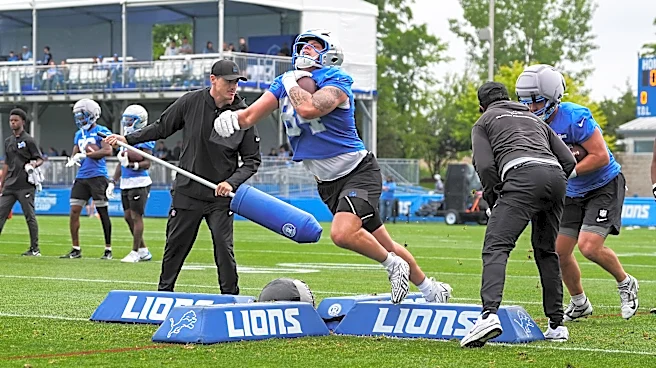
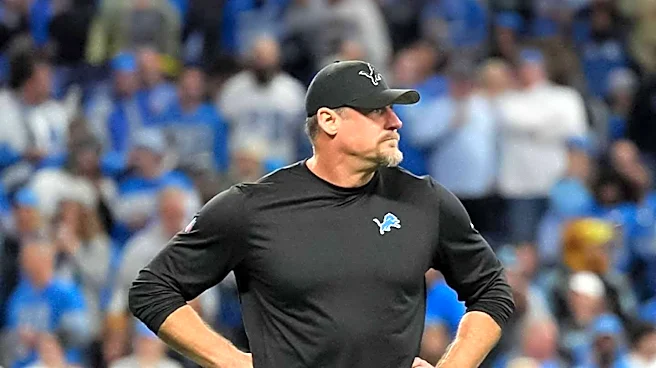
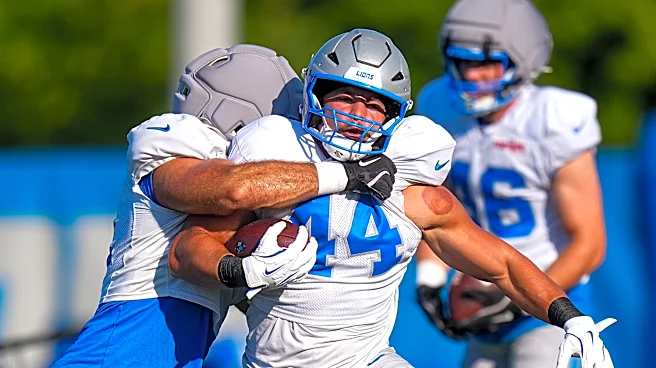
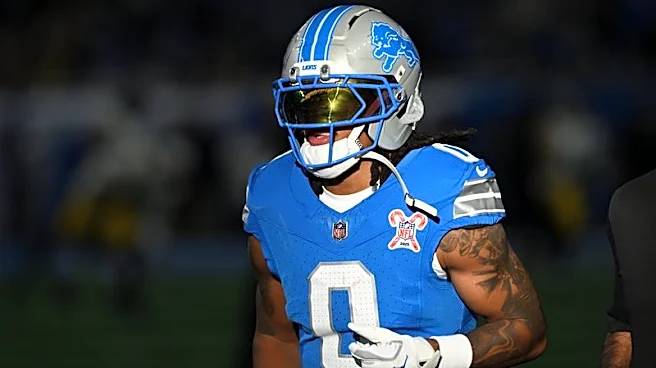
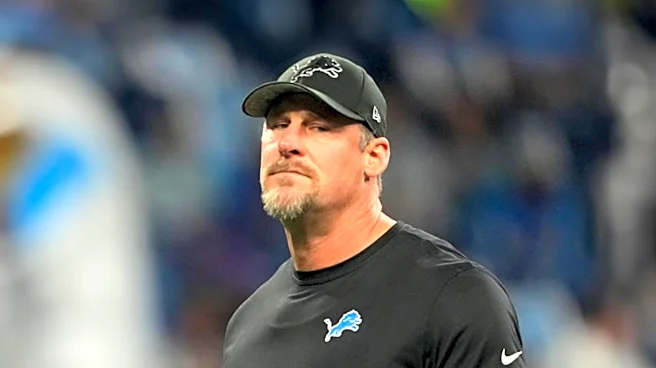
The Detroit Lions have made a strategic shift in their training camp practices, particularly during the first padded practice. Head coach Dan Campbell opted for two-hand touch drills instead of live tackling, a departure from previous years. This change
aims to reduce the risk of injury and improve players' form before engaging in full-contact drills. Campbell believes that easing players into tackling helps maintain control and safety during practice. This adjustment is part of a broader strategy to enhance player development and performance, as the Lions also modified their spring OTA and minicamp schedules and decided against joint practices this offseason.
Why It's Important?
The Lions' decision to alter their training camp approach reflects a growing emphasis on player safety and long-term development. By minimizing the risk of injury during practice, the team can maintain a healthier roster throughout the season. This approach also allows players to refine their skills in a controlled environment, potentially leading to better performance during games. The changes align with the Lions' overall strategy to build a competitive team capable of sustaining success over the long term. As the NFL continues to prioritize player safety, the Lions' methods could serve as a model for other teams.
What's Next?
The Lions will continue to evaluate the effectiveness of their new training camp strategies as they progress through the preseason. The coaching staff will monitor player performance and health, making adjustments as needed to optimize training outcomes. The team's approach to player development and safety will be closely watched by other NFL teams and analysts, potentially influencing broader trends in training camp practices across the league.