







What's Happening?
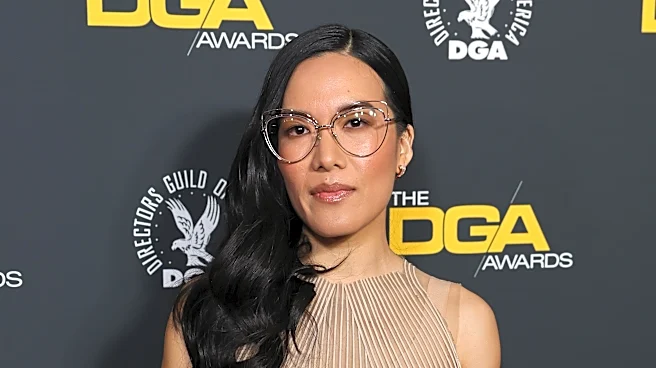
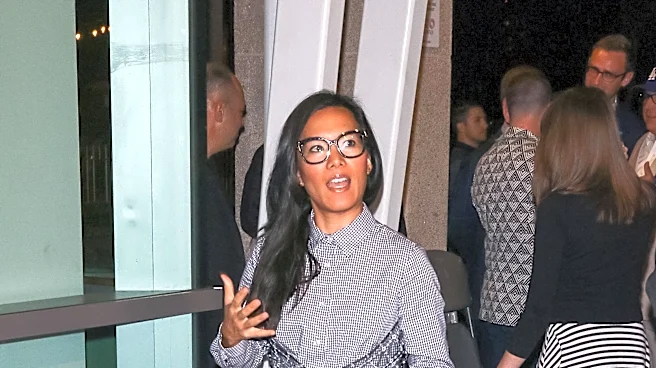
Comedian, actress, and writer Ali Wong has meticulously maintained the privacy of her two daughters, Mari and Nikki Hakuta, despite her highly public career. Wong, known for her candid stand-up specials like 'Baby Cobra' and 'Hard Knock Wife,' which often
feature anecdotes about motherhood and marriage, deliberately shields her children from the spotlight. She employs a 'no-face' policy on social media, where photos of her daughters are always taken from behind or have their faces obscured. This approach ensures their physical safety, digital autonomy, and a sense of normalcy, allowing them to grow up without a pre-existing public digital footprint. Wong's memoir, 'Dear Girls,' is framed as letters to her daughters, offering life advice while reinforcing her commitment to their privacy. Even after her divorce from Justin Hakuta, the couple has prioritized co-parenting and maintaining a stable, private environment for their children.
Why It's Important?
Ali Wong's deliberate strategy to protect her daughters' privacy sets a significant precedent in an era of pervasive social media and celebrity oversharing. This approach challenges the common practice of celebrity children being thrust into public view, offering a model for high-profile individuals to balance their public careers with their children's right to a private childhood. It underscores the growing concern over digital footprints and the long-term implications of early public exposure for minors. By normalizing the idea that a child's identity is separate from their parents' fame, Wong contributes to a cultural shift that values privacy and autonomy for children. This stance also highlights the potential for misinformation and speculation that arises when public figures choose to keep aspects of their lives private, emphasizing the need for media literacy and responsible reporting.
What's Next?
The continued commitment of Ali Wong and Justin Hakuta to their daughters' privacy is likely to influence other public figures and contribute to broader discussions about children's rights in the digital age. As their daughters, Mari and Nikki, grow older, the effectiveness of this 'shielded life' approach will be further observed, potentially shaping future norms for celebrity parenting. The ongoing challenge will be to navigate the persistent public curiosity while maintaining the boundaries they have established. This could lead to increased advocacy for stronger privacy protections for minors, both legally and culturally, as more public figures adopt similar strategies to safeguard their families from intense media scrutiny and online exposure.
Beyond the Headlines
Ali Wong's approach to her daughters' privacy delves into deeper ethical and cultural implications regarding the commodification of celebrity and the rights of children. It raises questions about the inherent tension between a public figure's right to share their life and a child's right to a private existence, free from the pressures and scrutiny of fame. This strategy also highlights the evolving nature of parenthood in the digital age, where parents must actively manage their children's online presence and protect them from potential exploitation. Furthermore, it subtly critiques the media landscape that often prioritizes sensationalism over individual privacy, prompting a re-evaluation of journalistic ethics concerning minors. The Hakuta daughters' multicultural heritage, being of Japanese, Filipino, Chinese, and Vietnamese descent, adds another layer to their protected upbringing, allowing them to develop their identities away from public stereotypes or expectations.