






What's Happening?
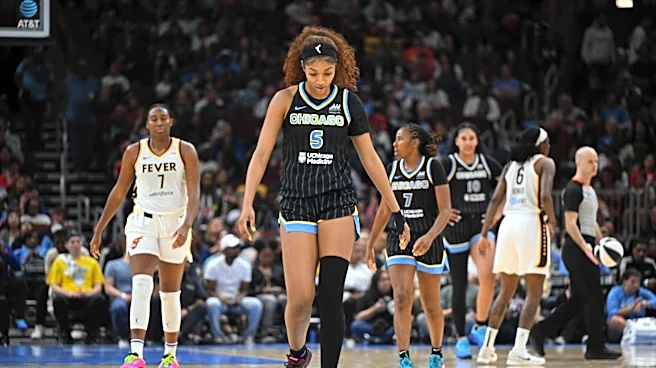
The Chicago Sky are under renewed scrutiny following their trade of Angel Reese, who subsequently led the Atlanta Dream to the WNBA Finals, and the impressive collegiate performance of Ajša Sivka. Sivka, a Slovenian player drafted 10th overall by the Sky in the 2025
WNBA draft, opted to sign with the Kentucky Wildcats for the 2026 season instead of joining the Sky. In her recent game against N.C. State, Sivka delivered a standout performance with 32 points, five rebounds, and three assists, shooting 11 of 17 from the field and an exceptional 8 of 12 from beyond the arc in Kentucky's 93-78 victory. Sivka cited the development opportunities under Kentucky head coach Kenny Brooks as her reason for choosing college, aiming to be fully prepared and confident before entering the WNBA. While the Sky retain her WNBA rights, her immediate impact in college highlights a potential missed opportunity for the team in the 2026 season.
Why It's Important?
This situation highlights critical strategic decisions made by the Chicago Sky and their immediate consequences. The trade of Angel Reese, a player who quickly achieved significant success with another team, raises questions about the Sky's roster management and talent evaluation. Furthermore, Ajša Sivka's decision to play college basketball instead of joining the Sky, coupled with her immediate high-level performance, underscores the challenges WNBA teams face in securing drafted talent and the potential impact of such decisions on team competitiveness. For the Sky, missing out on a shooter of Sivka's caliber in the 2026 season could be a significant setback, especially if they struggled with offensive production. This scenario also brings to light the growing trend of international players opting for collegiate development in the U.S. before entering the professional league, influencing draft strategies and player pathways.
What's Next?
The Chicago Sky will continue to hold Ajša Sivka's WNBA rights, meaning they could still benefit from her talent in future seasons if she eventually decides to join the league. However, her continued development and success in college will likely increase her value and potentially her leverage in future negotiations. For the Sky, the immediate future involves navigating the WNBA season without two potentially impactful players. This situation may prompt further evaluation of their draft and trade strategies. Other WNBA teams might also observe Sivka's path closely, potentially influencing how they approach drafting international players who may choose collegiate routes. The success of players like Sivka in college could also strengthen the argument for collegiate development as a viable and beneficial pathway to the WNBA.
Beyond the Headlines
This narrative extends beyond simple team performance, touching on broader themes within professional sports. It highlights the complex decision-making process for young athletes, particularly international ones, weighing immediate professional entry against further development in college. Sivka's choice reflects a strategic long-term view of her career, prioritizing skill refinement and confidence building. For the WNBA, it underscores the evolving landscape of player acquisition and development, where traditional draft-to-pro pathways are being re-evaluated. The Sky's situation also serves as a case study in the high-stakes nature of personnel decisions in professional sports, where trades and draft picks can have profound and immediate impacts on a franchise's trajectory. It also subtly points to the increasing competitiveness and talent pool in women's college basketball, making it an attractive development ground for future WNBA stars.