






What's Happening?
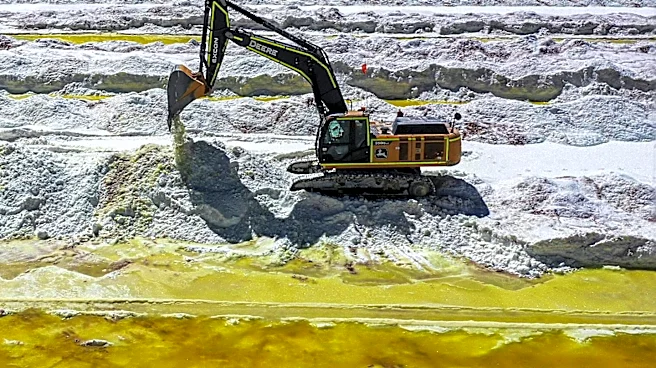
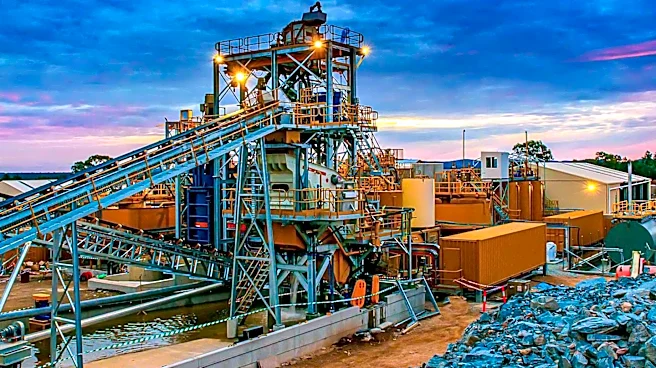
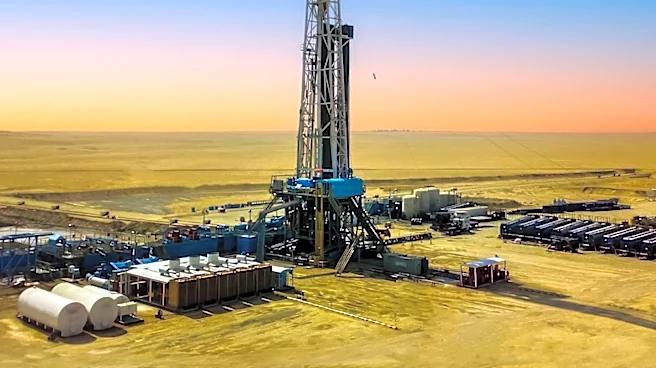
Artificial intelligence (AI) is transforming the field of mineral exploration by improving the identification of hidden ore deposits. Traditional methods, which rely on surface sampling and geophysical surveys, often fall short when deposits are buried
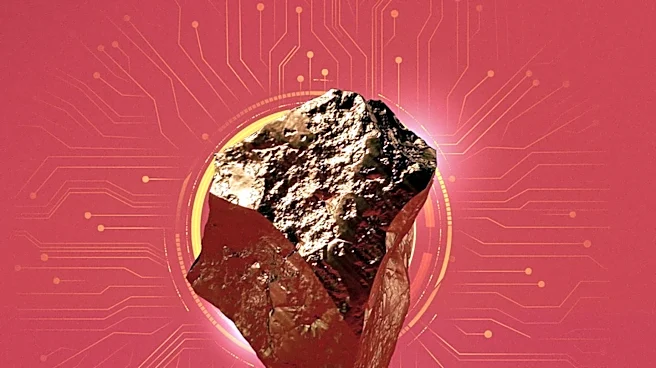
under thick layers of rock. AI, however, processes vast amounts of geophysical, geochemical, and geological data to identify mineral deposits that conventional methods might miss. Companies like KoBold Metals are using AI to create probabilistic maps that highlight where valuable ores are likely to be found. This approach has already advanced projects like the Mingomba copper project in Zambia, supporting the country's goal to increase copper output. AI models, such as DEEP-SEAM, have shown significant success in predicting rare-earth element prospectivity, with a high percentage of known deposits falling within the highest-prospectivity zones.
Why It's Important?
The integration of AI in mineral exploration is crucial as it significantly increases the success rate of discovering commercially viable mineral deposits. Traditional exploration methods have a low success rate, with only one in 300 attempts being successful. AI-driven workflows improve these odds by focusing resources on areas where multiple data streams indicate potential deposits. This not only accelerates the discovery process but also reduces costs and environmental impact by minimizing unnecessary drilling. The use of AI in this sector is particularly important as the demand for critical minerals, essential for technologies like electric vehicles and renewable energy, continues to rise. By enhancing the efficiency and accuracy of mineral exploration, AI supports the sustainable development of these resources.
What's Next?
As AI continues to prove its value in mineral exploration, more companies are likely to adopt these technologies to stay competitive. The success of AI-driven projects could lead to increased investment in AI research and development within the mining industry. Additionally, governments may collaborate with tech companies to digitize geological data and apply AI to national resource management strategies. The ongoing refinement of AI models, based on field feedback, will further enhance their accuracy and reliability, potentially leading to new discoveries in previously unexplored regions.