




What's Happening?
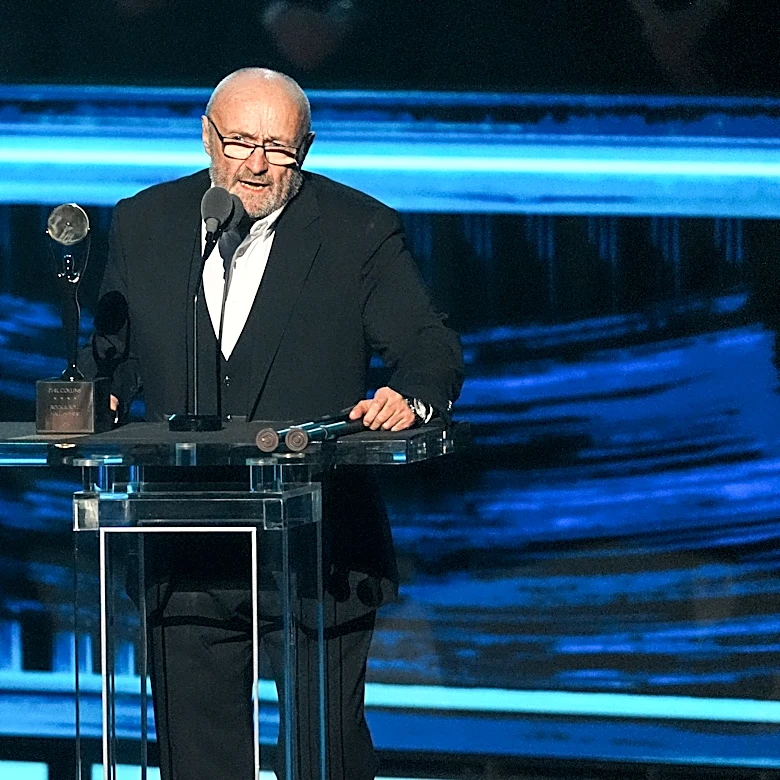
Phil Collins, the renowned musician, was inducted into the Rock & Roll Hall of Fame for his solo career on November 14, 2026, at the Peacock Theater in Los Angeles. This marks his second induction, having previously been honored as a member of Genesis
in 2010. Collins, 75, made a rare public appearance at the ceremony alongside his daughter Lily Collins, using walking sticks due to ongoing health issues. He has largely retreated from public life since his retirement from performing in 2022. Collins has faced numerous health setbacks, including five knee operations, nerve damage from a spinal injury affecting his ability to play drums, kidney problems, type 2 diabetes, and complications from COVID-119. Despite these challenges, he expressed delight at the recognition for his solo work, which includes hits like 'Against All Odds' and 'Another Day in Paradise.' He declined to perform at the ceremony due to his health, stating he is 'not match-fit.'
Why It's Important?
This induction is significant as it formally recognizes Phil Collins's immense impact as a solo artist, distinguishing his individual contributions from his foundational role in Genesis. His solo career produced numerous chart-topping hits and defined a significant era of pop music, influencing countless musicians and reaching a global audience. The event highlights the enduring legacy of artists who successfully transition from band members to solo stars. For fans, it's a moment of celebration for a beloved figure, while also drawing attention to the physical toll a long and demanding career can take on performers. His public appearance, supported by walking aids, underscores the reality of aging and health struggles in the entertainment industry, potentially fostering greater empathy and awareness for artists facing similar challenges. The recognition also solidifies his place in music history, ensuring his solo work receives its due alongside his band achievements.
What's Next?
While Phil Collins has expressed uncertainty about performing live again due to his health, his induction into the Rock & Roll Hall of Fame for his solo career may lead to renewed interest in his extensive discography. This could translate into increased streaming, album sales, and potential re-releases or documentaries exploring his solo work. Although he declined to perform at the induction ceremony, the recognition might inspire other forms of creative output, such as collaborations or studio projects that do not require the physical demands of live performance. The event also serves as a reminder of the importance of preserving and celebrating the legacies of influential musicians, potentially prompting further retrospectives or tributes to Collins's career in the coming years. His daughter, Lily Collins, who accompanied him, may also continue to share insights into his journey, keeping his story in the public eye.
Beyond the Headlines
Phil Collins's dual induction into the Rock & Roll Hall of Fame—first with Genesis and now as a solo artist—underscores a broader narrative within the music industry regarding individual versus collective artistic identity. It highlights the challenge and triumph of artists who manage to forge distinct and successful careers outside the shadow of their original bands. This achievement also brings to light the often-unseen physical and mental health battles faced by performers, even those at the pinnacle of their careers. Collins's candidness about his health issues, including nerve damage and diabetes, humanizes a rock icon and can serve as a powerful message about resilience and the importance of self-care. His story reflects the evolving nature of musical legacies, where an artist's impact is measured not just by their peak performance but also by their enduring influence and ability to adapt to life's challenges.