




What's Happening?
BMW has reiterated its stance against rejoining the Formula 1 grid, citing challenges related to technology transfer. The German manufacturer, which sold its majority stake in the Sauber team in 2009, believes that F1 is too far removed from production
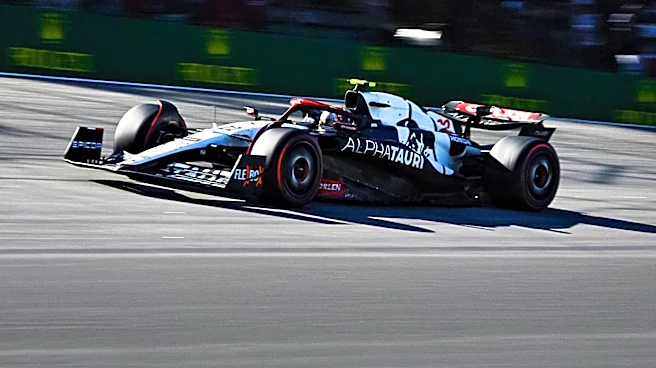
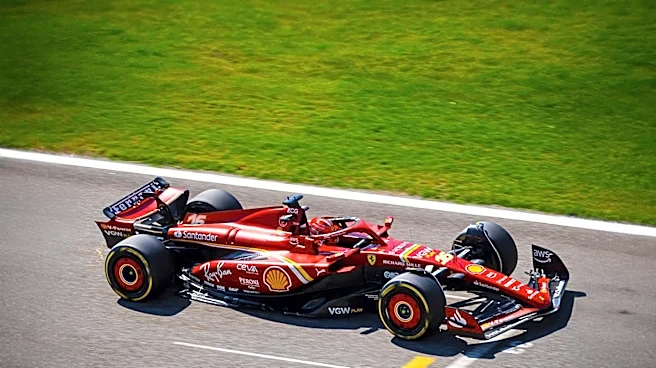
cars to offer meaningful technological benefits. Frank van Meel, head of BMW M, stated that F1 acts too much as a 'laboratory' and does not translate well enough to their production vehicles. This position contrasts with other major automotive brands like Audi and Mercedes, which are actively involved in F1, and new entrants such as Cadillac and Ford. BMW's current motorsport strategy focuses on series like the World Endurance Championship (WEC) and IMSA SportsCar Championship, where they utilize a V8 hybrid engine in their M Hybrid V8, allowing for more direct technology transfer to their M5 and XM production models. The company also sells track-focused GT3 and GT4 versions of the BMW M4 to customer teams globally.
Why It's Important?
BMW's decision highlights a strategic divergence within the automotive industry regarding the value of Formula 1 as a platform for technological development and brand promotion. While many manufacturers see F1's advanced hybrid powertrains and global reach as crucial for innovation and marketing, BMW prioritizes motorsport series that offer a more direct and immediate transfer of technology to its road cars. This approach could influence how other automotive companies evaluate their motorsport investments, potentially leading to a re-evaluation of F1's relevance for production car development. For the U.S. market, which BMW M considers 'extremely important' and accounts for approximately 40% of its volume, involvement in IMSA is seen as crucial for brand popularity and product development. The direct application of racing technology, such as airflow-optimized hoods and diffusers from the M4 GT3 and lighting graphics from their LMDh race car, into concepts like the M Concept New Class, demonstrates a tangible benefit for consumers and the company's product pipeline.
What's Next?
BMW is expected to continue its focus on motorsport series like the World Endurance Championship (WEC) and IMSA SportsCar Championship, leveraging these platforms for direct technology transfer to its production vehicles. The company will likely further integrate racing innovations into its M performance division, emphasizing the 'motorsport into production cars' philosophy. This strategy suggests that BMW will not be among the new manufacturers entering Formula 1 in the foreseeable future, despite the sport's growing popularity and the involvement of rival brands. Instead, their efforts will remain concentrated on developing and promoting their M series cars through racing that offers more immediate and practical applications for their consumer market, particularly in the U.S. market, which is critical for their sales volume.
Beyond the Headlines
BMW's stance on Formula 1 reflects a broader philosophical debate within the automotive industry about the purpose and value of motorsport. While F1 is often seen as the pinnacle of automotive engineering and a global marketing spectacle, BMW's perspective suggests a more pragmatic approach, prioritizing tangible technological benefits for its consumer products. This could lead to a deeper examination of the return on investment for manufacturers in various racing series. It also underscores the increasing importance of hybrid technology in both racing and road cars, with BMW's V8 hybrid powertrains serving as a direct link between its racing efforts and its high-performance production vehicles. The emphasis on the U.S. market's importance for BMW M further highlights how regional market dynamics can influence global motorsport strategies and technological development priorities.