









What's Happening?
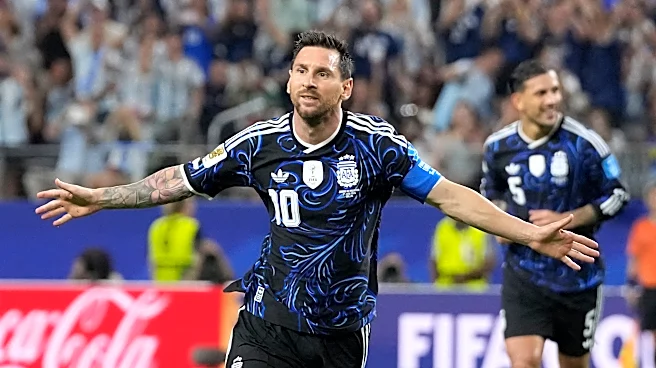
The expansion of the FIFA World Cup from 32 to 48 teams has led to a mix of predictable and surprising outcomes, drawing comparisons to the NCAA's March Madness. While favorites like Argentina and France have dominated their group stages, unexpected results
have emerged, such as Spain's draw with Cape Verde and England's draw with Ghana. These developments mirror the unpredictability of March Madness, where lower-ranked teams often challenge higher-seeded opponents. The tournament's structure allows for such surprises, as teams advance from the group stage to a single-elimination format.
Why It's Important?
The World Cup's expansion has increased the tournament's unpredictability, making it more engaging for fans worldwide. This format allows smaller nations to compete on a global stage, potentially leading to 'Cinderella stories' similar to those in March Madness. For the U.S. audience, this comparison highlights the universal appeal of sports tournaments that combine skill with the potential for upsets. The expanded format also provides more opportunities for teams to showcase their talent, contributing to the global growth of soccer.
Beyond the Headlines
The World Cup's expansion reflects broader trends in sports, where inclusivity and global representation are increasingly prioritized. This approach not only enhances the tournament's appeal but also promotes cultural exchange and understanding through sports. Additionally, the tournament's structure emphasizes the importance of resilience and adaptability, as teams must navigate both group stages and knockout rounds. These elements contribute to the World Cup's status as a premier international sporting event, drawing parallels to other major competitions like March Madness.