

What's Happening?
The Buffalo Bills have announced that their new $2.1 billion Highmark Stadium will feature a natural grass playing surface. This decision was made early in the stadium's design process, driven by the team's ownership, Terry and Kim Pegula, who prioritized
player safety and performance. The natural grass surface is supported by advanced technology, including a subair system and grow lamps, to maintain optimal conditions throughout the year. This move aligns with the NFL Players Association's advocacy for natural surfaces, which are believed to reduce lower-body injuries compared to artificial turf. The decision reflects a commitment to player health and is expected to enhance the team's performance by providing a safer playing environment.
Why It's Important?
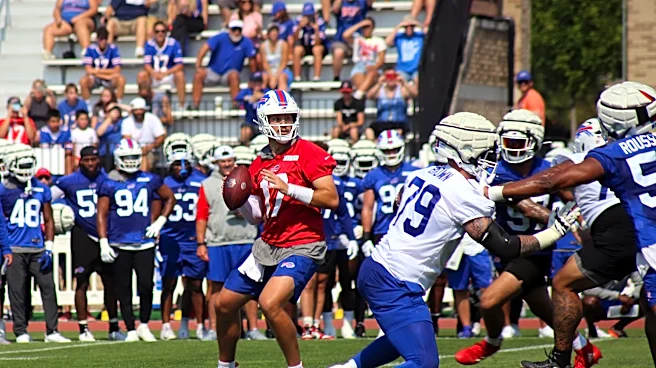
The choice to install natural grass at Highmark Stadium is significant for several reasons. Firstly, it demonstrates the Bills' commitment to player safety, addressing concerns about injury risks associated with artificial turf. This decision could influence other NFL teams to consider similar investments in player welfare. Additionally, the use of advanced technology to maintain the grass surface highlights the evolving nature of stadium infrastructure and the importance of integrating innovative solutions to meet modern demands. The investment in natural grass also reflects the team's long-term strategy to preserve the health and performance of key players, such as quarterback Josh Allen, whose playing style involves significant physical contact.
What's Next?
As the new stadium prepares to open, the Bills will continue to focus on optimizing the playing surface and ensuring it meets the highest standards for player safety and performance. The team may also engage with other NFL franchises to share insights and best practices related to stadium design and maintenance. The successful implementation of natural grass at Highmark Stadium could set a precedent for future stadium projects across the league. Additionally, the Bills will monitor the impact of the new surface on player performance and injury rates, potentially influencing future decisions regarding stadium infrastructure and player health initiatives.