




What's Happening?
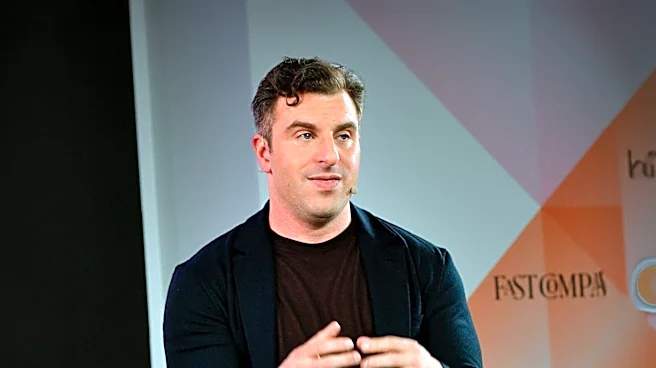
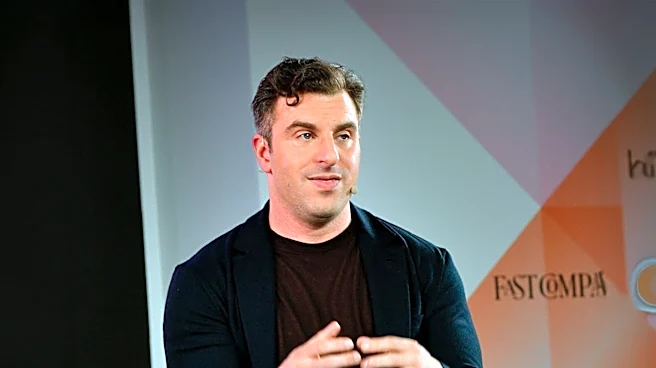
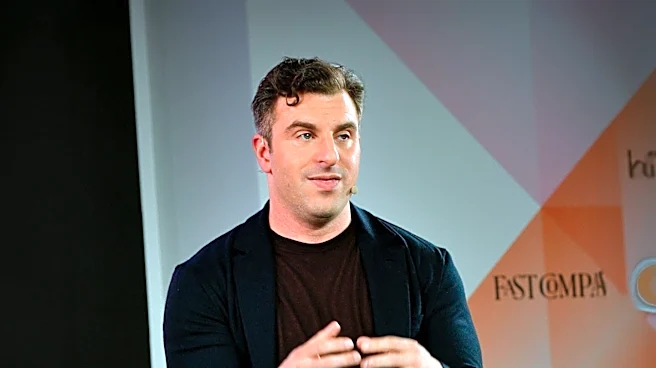
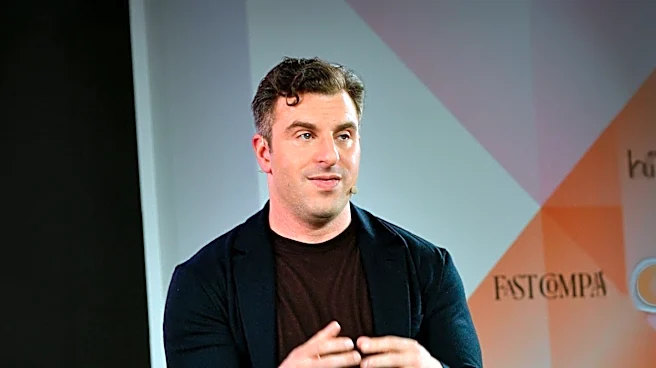
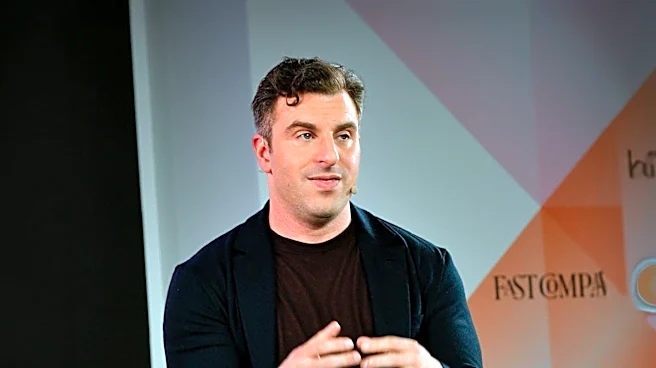
Airbnb CEO Brian Chesky has revealed a strong preference for texting over email when communicating with his staff, stating he rarely sends emails, perhaps only one per week. According to Chesky, email is an 'inferior' form of communication compared to texting,
which he finds to be faster, more contextual, and conducive to a deeper connection. He believes that text messages feel less like 'work' to respond to, making staff more responsive. Chesky ranks in-person communication as the best, followed by Zoom, then text, and finally email. He manages an 8,200-person workforce and aims to reach them more effectively through direct messaging. While he tries to avoid texting staff during family time unless there's a crisis, he acknowledges his own work-life balance is more 'blended' than average.
Why It's Important?
This communication approach by a prominent CEO like Brian Chesky could influence corporate communication strategies across various U.S. industries. His preference for immediate, personal communication methods like texting over traditional email highlights a shift in leadership styles and expectations for responsiveness. This could lead to increased adoption of instant messaging platforms in professional settings, potentially blurring the lines between work and personal time for employees. While Chesky views texting as more efficient, it raises concerns about employee well-being and work-life balance, especially given research indicating that a significant portion of millennial workers would consider quitting if contacted by their boss outside work hours. Companies might need to re-evaluate their communication policies to balance efficiency with employee satisfaction and retention.
What's Next?
The trend of CEOs favoring instant messaging could prompt other companies to explore similar communication models, potentially leading to a broader integration of texting and chat applications into corporate workflows. This might necessitate the development of new guidelines for professional communication to manage expectations around response times and off-hours contact. Businesses may also need to invest in tools that facilitate quick, informal communication while still allowing for structured, documented exchanges when necessary. Employees, particularly younger generations, might increasingly expect and prefer these direct communication methods, but companies will need to address the potential for burnout and the erosion of personal time. The long-term impact on corporate culture and employee engagement will likely be a subject of ongoing discussion and adaptation.
Beyond the Headlines
Chesky's communication philosophy touches upon deeper societal shifts regarding technology and work culture. The distinction he draws between 'subject-based' email and 'person-based' text messages reflects a desire for more authentic and immediate human connection, even in a professional context. However, this push for constant connectivity can inadvertently contribute to a culture of 'always-on' work, where the boundaries between professional and personal life become increasingly permeable. This raises ethical questions about the employer's right to access an employee's time and attention outside of traditional working hours. The perceived 'inferiority' of email might also signal a broader generational shift in communication preferences, where younger professionals are more accustomed to and efficient with instant messaging, potentially creating a divide in communication effectiveness within multi-generational workforces.