






What's Happening?
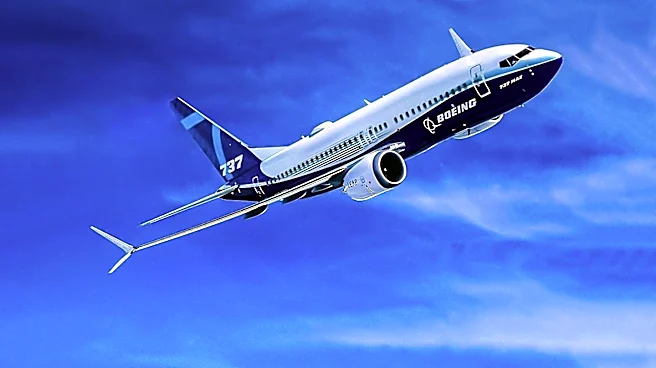
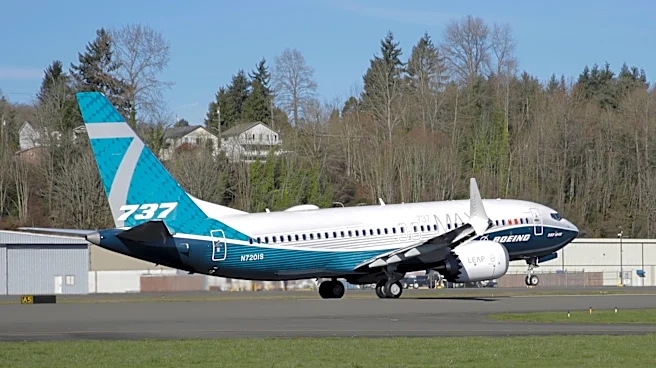
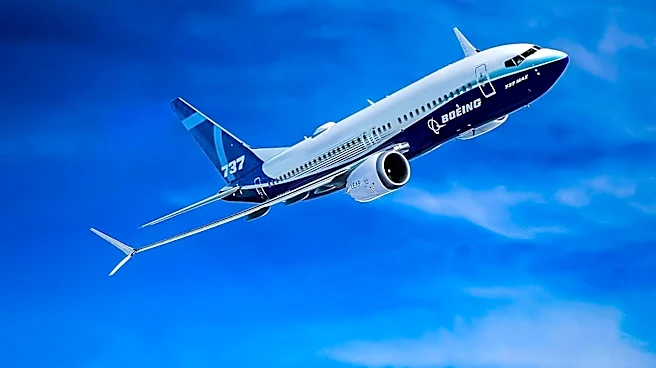
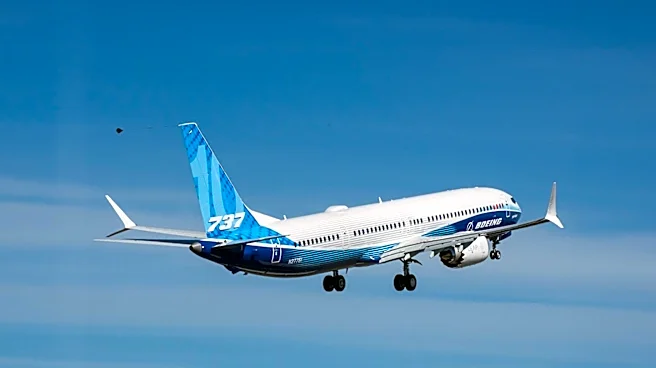
The Federal Aviation Administration (FAA) has certified Boeing's 737 MAX 7 aircraft, marking a significant milestone for the company after years of delays. The certification process was extended due to new federal requirements following two fatal crashes
involving the MAX series in 2018 and 2019. Boeing's 737 MAX 7 is the first new aircraft to be cleared since these incidents, which had severely impacted the company's performance. The FAA's approval comes after Boeing completed 441 flight tests over 686 hours. The certification is expected to allow Boeing to ramp up production and meet its financial targets, including generating $10 billion in annual free cash flow. Boeing shares rose by 8% following the announcement.
Why It's Important?
The certification of the 737 MAX 7 is crucial for Boeing as it seeks to recover from a period of financial underperformance and reputational damage following the MAX crashes. The approval allows Boeing to increase production rates, which is essential for meeting its medium-term financial goals. The move is also significant for the aviation industry, as it restores confidence in Boeing's ability to produce safe and reliable aircraft. The certification could lead to increased orders from airlines, particularly as the aviation sector continues to recover from the impacts of the COVID-19 pandemic. Additionally, the FAA's rigorous review process may set a new standard for aircraft certification, influencing future regulatory practices.
What's Next?
Boeing plans to begin deliveries of the 737 MAX 7 to launch customer Southwest Airlines in the coming months. The company is also working towards the certification of the 737 MAX 10 and the 777X, which are expected to further boost its market position. Boeing aims to increase its monthly production rate of the MAX series to 52 jets, with plans to expand further. The company will need to ensure a stable supply chain to meet these production targets. The successful rollout of the MAX 7 could lead to increased market confidence and potentially more orders from airlines looking to update their fleets.