




What's Happening?
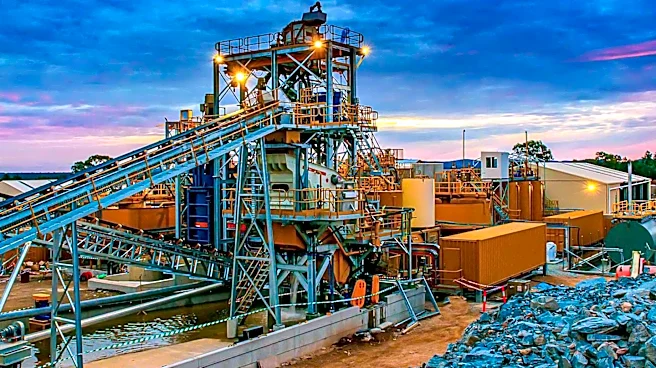
Ethiopian Prime Minister Abiy Ahmed has announced the launch of the country's first-ever National Precious Metals Refinery at the Bole Lemi Special Economic Zone. This new facility, established through a partnership between Ethiopian Investment Holdings
(EIH) and Sam Precious Metals, boasts a capacity to process over 600 tonnes of precious metals annually. The initiative is designed to enhance domestic value addition within Ethiopia's mining sector and to position the nation as a key regional hub for precious-metals refining. This development is part of the Medemer government's broader strategy to connect productive resources with industrial capacity, thereby boosting export earnings and creating skilled employment opportunities. The refinery is also expected to support the local jewelry industry and foster a more transparent and competitive gold value chain, shifting the focus from raw resource extraction to industrial transformation within the country.
Why It's Important?
The establishment of the National Precious Metals Refinery is a significant step for Ethiopia's economic development, particularly in its mining sector. By processing precious metals domestically, Ethiopia aims to capture a larger share of the value chain, which traditionally has been realized by foreign refiners. This move is expected to increase export earnings, as refined metals command higher prices than raw materials. Furthermore, the project is anticipated to create numerous skilled jobs, contributing to economic growth and human capital development. The refinery's role in supporting the local jewelry industry could also stimulate ancillary businesses and foster a more robust internal market for precious metals. This strategic investment aligns with Ethiopia's goal of becoming a regional economic powerhouse, reducing its reliance on imported refined metals and enhancing its self-sufficiency in a critical industry.
What's Next?
Following the launch, the National Precious Metals Refinery is expected to commence full-scale operations, focusing on maximizing its 600-tonne annual processing capacity. The partnership between Ethiopian Investment Holdings and Sam Precious Metals will likely concentrate on optimizing refining processes, ensuring adherence to international standards, and establishing robust supply chains for both raw materials and refined products. The Ethiopian government will likely monitor the refinery's impact on export earnings, job creation, and the growth of the domestic jewelry sector. Efforts will also be directed towards attracting further investment in the mining and processing industries, leveraging the refinery's presence to solidify Ethiopia's position as a regional leader in precious metals. Additionally, the government may explore policies to encourage local miners to supply the refinery, further integrating the domestic economy.
Beyond the Headlines
Beyond its immediate economic benefits, the National Precious Metals Refinery signifies a broader strategic shift for Ethiopia towards industrialization and economic diversification. By moving up the value chain in the mining sector, Ethiopia is challenging traditional models of resource extraction where raw materials are exported with minimal domestic processing. This could inspire other African nations to pursue similar strategies, fostering greater economic independence and regional self-reliance. The emphasis on a 'more transparent and competitive gold value chain' also suggests an effort to combat illicit trade and improve governance within the mining sector, which has historically been vulnerable to informal and unregulated activities. This initiative could set a precedent for sustainable and responsible resource management, contributing to long-term economic stability and development in the region.