







What's Happening?
WWE's transition to high-definition (HD) television nearly two decades ago significantly altered how wrestlers perform, according to Cody Rhodes. The shift, which began in January 2008 with Raw and subsequently rolled out to ECW and Friday Night SmackDown,
necessitated a more nuanced approach to storytelling within the ring. Rhodes explained that before HD, wrestlers like Hulk Hogan used exaggerated gestures to ensure fans in the cheapest seats could follow the narrative. However, with HD broadcasting and advanced camera work, performers can now rely on smaller expressions and movements to convey their stories, as cameras capture every detail. This change allows for more subtle performances while still acknowledging the live audience.
Why It's Important?
This evolution in WWE's presentation highlights a broader impact of technological advancements on live entertainment and performance arts. The move to HD television forced performers to refine their craft, emphasizing facial expressions and subtle body language over broad, arena-filling gestures. This shift not only enhanced the viewing experience for television audiences but also influenced the training and performance techniques of professional wrestlers. It underscores how media technology can reshape an entire industry's artistic and technical demands, pushing performers to adapt to new visual standards. The ability to convey emotion and narrative through subtle cues becomes paramount, affecting how wrestlers are trained, how matches are choreographed, and ultimately, how stories are told to a global audience.
What's Next?
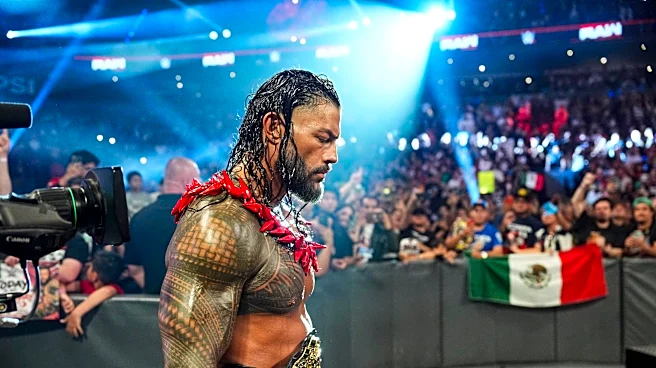
The continued advancement of broadcasting technology, including higher resolutions and more immersive viewing experiences, will likely further influence performance styles in professional wrestling. Wrestlers will need to continue adapting their techniques to leverage these technological improvements, potentially leading to even more detailed and character-driven performances. The emphasis on individual camera work, as exemplified by Roman Reigns, suggests a future where performers are increasingly skilled at connecting directly with the television audience through subtle interactions with the camera. This ongoing adaptation will shape future training regimens and performance expectations within WWE and similar entertainment industries.
Beyond the Headlines
The impact of HD television on WWE wrestling extends beyond mere aesthetics; it delves into the very psychology of performance and audience engagement. The shift from catering to the 'cheapest seat' in the arena to a global television audience represents a fundamental change in the performer-audience dynamic. It raises questions about authenticity versus theatricality and how performers balance the needs of a live crowd with the demands of a televised product. This technological catalyst has subtly redefined what constitutes a 'good' performance in wrestling, favoring nuanced acting over overt showmanship. It also reflects a broader trend in entertainment where technology increasingly dictates artistic expression and consumption, blurring the lines between live event and mediated experience.