






What's Happening?
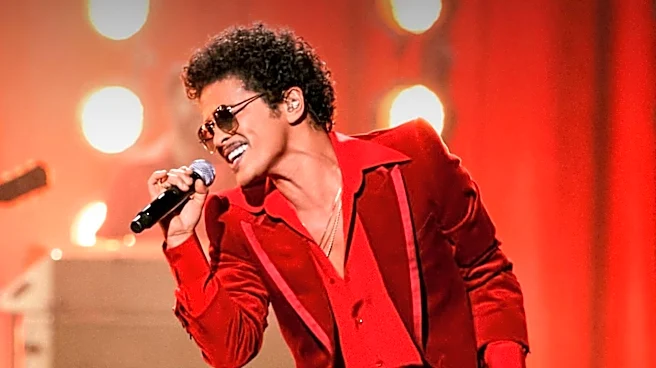
Bruno Mars' popular song 'The Lazy Song' includes a direct reference to the P90X fitness program in its lyrics. The line, 'Tomorrow I'll wake up, do some P90X,' humorously contrasts the song's theme of extreme laziness with a future intention of engaging
in a highly demanding workout regimen. This lyrical inclusion demonstrates P90X's penetration into mainstream popular culture, moving beyond its primary audience of fitness enthusiasts. The song, known for its lighthearted and relatable portrayal of a day spent avoiding responsibilities, uses P90X as a recognizable symbol of intense physical effort and self-improvement, even if only as a deferred aspiration. This casual mention suggests a widespread public awareness of the program and its reputation for rigorous training.
Why It's Important?
The integration of P90X into popular song lyrics signifies its status as a cultural touchstone in the U.S. fitness landscape. When a specific fitness program is referenced in mainstream music, it indicates a broad public recognition and understanding of what that program entails. This cultural embedding can influence public perception of fitness, associating P90X with a commitment to physical transformation and a challenging workout experience. For the fitness industry, such mentions provide invaluable, organic marketing, reinforcing the brand's visibility and credibility. It also reflects a societal trend where fitness and self-improvement are increasingly part of everyday conversation and cultural references, potentially inspiring more individuals to consider engaging in structured exercise programs, even if initially as a humorous or aspirational thought.
What's Next?
The continued presence of P90X in popular culture, as exemplified by its mention in 'The Lazy Song,' suggests that the program's legacy and brand recognition will persist. This cultural footprint can contribute to sustained interest in high-intensity home workout programs and the broader fitness industry. Artists and media creators may continue to draw upon well-known fitness brands like P90X to convey themes of discipline, aspiration, or even humorous procrastination. For consumers, this widespread recognition might lead to a greater willingness to explore similar fitness products or services, driven by familiarity and cultural reinforcement. The ongoing evolution of fitness trends will likely see P90X's core principles adapted and re-marketed, ensuring its continued relevance in a competitive market.
Beyond the Headlines
The casual reference to P90X in 'The Lazy Song' offers a deeper insight into the cultural narrative surrounding fitness and personal discipline. It highlights the societal expectation of striving for physical perfection, even when juxtaposed with the desire for leisure. This dynamic reflects a common internal conflict many individuals face: the pull between immediate gratification and long-term health goals. The song's humor lies in this very contrast, making P90X a symbol of the 'tomorrow's task' that represents effort and self-improvement. This cultural phenomenon can subtly reinforce the idea that intense, structured workouts are the benchmark for serious fitness, potentially influencing how individuals approach their own health journeys and the types of fitness programs they seek out.