








What's Happening?
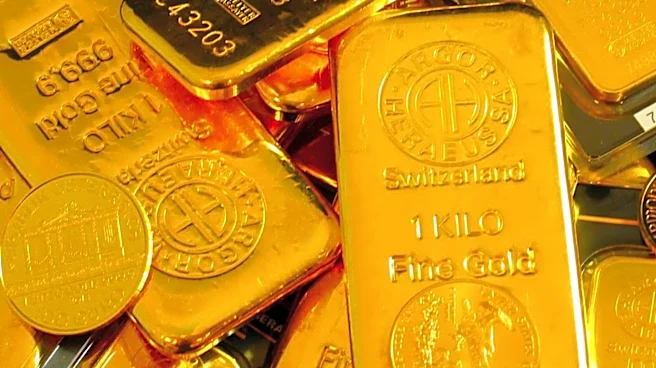
Ramelius Resources, a gold producer listed on the Australian Securities Exchange (ASX:RMS), has announced that it has met its full-year production guidance for the sixth consecutive year. The company reported producing 192,182 ounces of gold, which falls
within its guidance range of 185,000 to 205,000 ounces. In the June quarter alone, gold production increased by 40% compared to the previous quarter, totaling 53,466 ounces. Despite this achievement, the company's share price has declined by 28% in 2026, attributed to a broader sell-off in gold shares following a significant bull run in 2024 and 2025. Ramelius also reported an underlying free cash flow of $138.3 million and a cash and gold balance of $649.6 million. The company is in the process of a $250 million buyback, with 44% still remaining, and recently sold a non-core asset, Edna May, for $210 million in cash and $90 million in shares.
Why It's Important?
The consistent achievement of production guidance by Ramelius Resources underscores the company's operational efficiency and resilience in the volatile gold market. This performance is significant for shareholders, as it reflects the company's ability to generate substantial cash flow and maintain a strong financial position. However, the decline in share price highlights the challenges faced by the gold sector, as investors rotate out of gold stocks following a period of high returns. This trend could impact the company's market valuation and investor sentiment. The broader implications for the gold industry include potential shifts in investment strategies and the need for companies to adapt to changing market conditions. Ramelius's ability to sustain its production levels and financial health will be crucial in navigating these challenges.
What's Next?
Looking ahead, Ramelius Resources will need to focus on maintaining its production levels and financial performance to support its share buyback program and deliver value to shareholders. The company may also explore strategic opportunities to enhance its asset portfolio and strengthen its market position. Additionally, the broader gold sector will need to address investor concerns and adapt to evolving market dynamics. This could involve exploring new growth avenues, optimizing operations, and enhancing shareholder returns through dividends and buybacks. The company's future performance will be closely watched by investors and industry analysts, as it navigates the challenges and opportunities in the gold market.