









What's Happening?
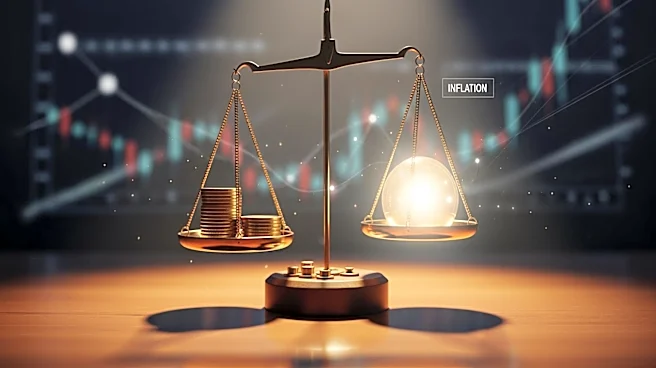
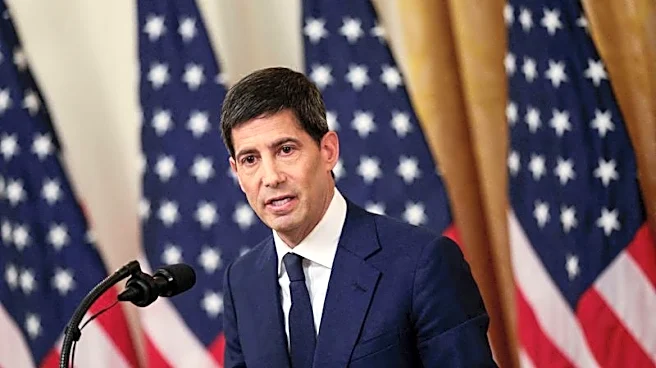
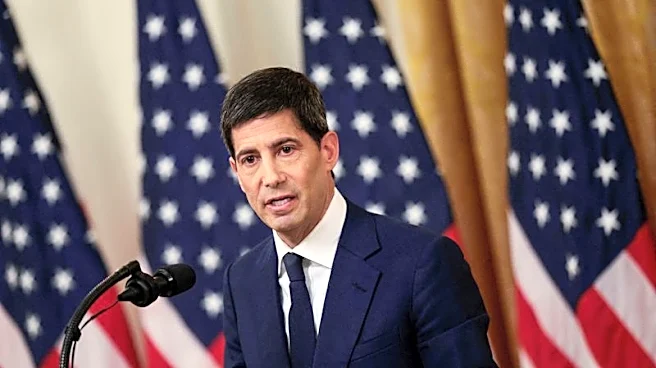
The Federal Reserve has decided to keep interest rates steady, marking the first major policy decision under new chair Kevin Warsh. The decision comes amid persistent inflation pressures and economic uncertainty. The Fed's benchmark interest rate remains
in the range of 3.5% to 3.75%, with half of the policymakers indicating support for a rate hike later this year. The move reflects the Fed's focus on balancing inflation control with economic growth, as inflation recently climbed to 4.2%, complicating efforts to lower borrowing costs.
Why It's Important?
The Fed's decision impacts borrowing costs across the economy, influencing mortgages, credit cards, and savings accounts. Higher rates can help curb inflation but may slow economic growth. The decision is significant as it sets the tone for U.S. monetary policy under Warsh's leadership, with markets closely watching for clues on future rate hikes. The Fed's approach to managing inflation and supporting growth is crucial for economic stability, affecting consumer spending and investment decisions.
What's Next?
The Fed will continue to monitor inflation and economic growth data, with future rate decisions likely influenced by these factors. The next scheduled meeting is from July 28 to 29, where further insights into the Fed's policy direction may be revealed. Warsh's leadership will be scrutinized as markets seek clarity on potential rate hikes or cuts.