





What's Happening?
Hilton is promoting its all-inclusive resorts, such as Hilton Cancun Mar Caribe All-Inclusive Resort and Zemi Miches Punta Cana All-Inclusive Resort, Curio Collection by Hilton, as ideal destinations for family vacations. These resorts aim to simplify
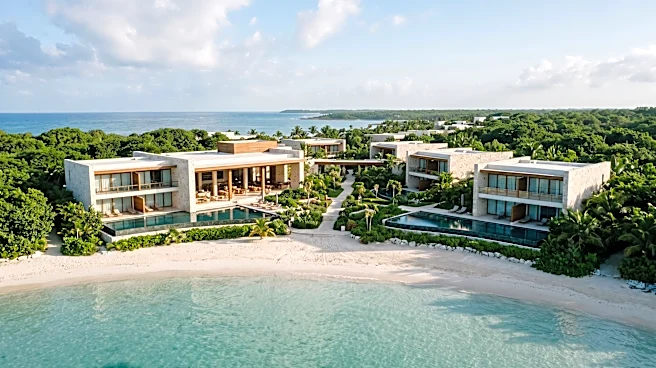
trip planning by including meals, activities, and entertainment in the upfront cost. The Hilton Cancun Mar Caribe resort, located between the Caribbean Sea and Nichupté Lagoon, features 13 pools, a kids' splash zone, an adults-only sundeck, and poolside food and drink service. Similarly, the Zemi Miches Punta Cana resort offers an on-site water park with four slides, a splash zone, and activities like paddleboarding, kayaking, snorkeling, bowling, laser tag, escape rooms, and arcade games. Hilton Tulum Riviera Maya All-Inclusive Resort provides dedicated family room blocks near kid-friendly amenities, including clubs for children and lounges for teens, alongside options for adults like guided bike tours and sound baths. These resorts also facilitate excursions beyond the property, such as tours of Mayan ruins, snorkeling, cenote swimming, and ziplining.
Why It's Important?
The growing popularity of all-inclusive resorts, particularly those offered by major hospitality brands like Hilton, signifies a shift in consumer preferences towards simplified and comprehensive vacation packages. For families, this model reduces the stress of planning and budgeting for meals and activities, allowing for a more relaxed travel experience. The inclusion of diverse amenities, from water parks and kids' clubs to adult-focused activities and off-property excursions, caters to a wide range of interests within a single family unit. This trend impacts the travel and tourism industry by encouraging other hospitality providers to enhance their all-inclusive offerings to remain competitive. It also highlights the economic benefit for destinations hosting these large resorts, as they attract a steady stream of tourists and generate local employment. The emphasis on varied activities within the resort also suggests a move towards self-contained vacation experiences, potentially influencing local economies that rely on tourist spending outside resort grounds.
What's Next?
The success of these all-inclusive models is likely to lead to further expansion and diversification of offerings within the hospitality sector. Hilton and other major hotel chains may continue to invest in developing more all-inclusive properties in popular tourist destinations, focusing on unique amenities and experiences to attract different market segments. There could be an increased emphasis on personalized all-inclusive packages, allowing guests to customize their inclusions based on their preferences. Furthermore, the trend might prompt local tour operators and businesses in resort areas to forge stronger partnerships with these large resorts to offer curated off-property excursions, ensuring they also benefit from the influx of tourists. The industry may also see innovations in technology integration within all-inclusive resorts, such as app-based activity booking and dining reservations, to further enhance guest convenience and streamline operations.
Beyond the Headlines
The rise of all-inclusive resorts, while convenient, also presents deeper implications for local communities and the broader tourism ecosystem. While these resorts bring economic benefits through job creation and infrastructure development, they can also create isolated tourist enclaves, potentially limiting direct engagement between visitors and local cultures. The self-contained nature of all-inclusive resorts might reduce tourist spending in local businesses outside the resort gates, impacting small enterprises. Environmentally, the large-scale operations of these resorts, including water usage, waste generation, and energy consumption, pose sustainability challenges that require careful management and responsible practices. The long-term cultural impact on host communities, as they adapt to cater to the demands of mass tourism, is another critical aspect. Balancing the economic advantages with environmental and cultural preservation will be a continuous challenge for destinations embracing the all-inclusive model.