





What's Happening?
The culinary world continues to debate the true origin of the classic American dish, Eggs Benedict, with two iconic New York establishments, Delmonico's and the Waldorf Hotel, each claiming its creation. One popular account attributes the dish to Chef
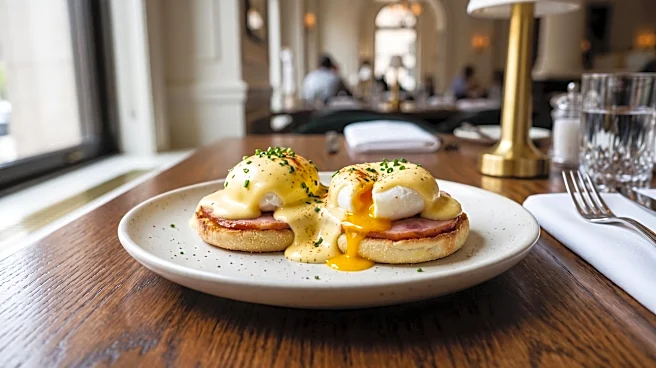
Charles Ranhofer of Delmonico's, who allegedly created 'Eggs à la Benedict' for socialite Madame Legrand Benedict. This version is supported by its inclusion in Ranhofer's 1894 cookbook, 'The Epicurean.' Conversely, the Waldorf Hotel claims its staff created a similar dish for Wall Street stockbroker Lemuel Benedict, who requested buttered toast, poached eggs, bacon, and hollandaise sauce. The Waldorf's maître d’hôtel, Oscar Tschirsky, reportedly liked the dish and added it to the menu, substituting ham for bacon. The dish, a combination of French and American cuisine, typically features a toasted English muffin, ham, a poached egg, and hollandaise sauce, though variations exist, such as those served in Paris on brioche or croissants.
Why It's Important?
The ongoing debate over the origin of Eggs Benedict highlights the rich culinary history of American cuisine and the significant influence of iconic New York restaurants in shaping dining culture. This discussion is important for food historians and enthusiasts as it delves into the evolution of classic dishes and the stories behind their creation. It also underscores the competitive nature of the restaurant industry, where claiming credit for popular dishes can enhance a establishment's legacy and prestige. For the broader food industry, understanding the origins of such a widely recognized dish can inspire new culinary interpretations and appreciate the foundational elements of American breakfast and brunch menus. The story also illustrates how culinary innovations often arise from specific customer requests and the creativity of chefs.
What's Next?
The debate over the true origin of Eggs Benedict is unlikely to be definitively resolved, as both establishments have compelling, albeit anecdotal, claims. Culinary historians and food writers will likely continue to explore and present evidence supporting either side, keeping the discussion alive. Restaurants and chefs may continue to offer their own interpretations of the dish, sometimes referencing one of the two origin stories in their menus. The enduring popularity of Eggs Benedict ensures that its history will remain a topic of interest in culinary circles, potentially leading to more research into historical menus and personal accounts from the late 19th and early 20th centuries. The story serves as a timeless anecdote in the narrative of American gastronomy.
Beyond the Headlines
Beyond the historical dispute, the story of Eggs Benedict reflects the broader cultural exchange and adaptation that characterizes American cuisine. The dish, with its French-inspired hollandaise sauce and American breakfast components, symbolizes the fusion of culinary traditions. It also speaks to the role of high-end hotels and restaurants in shaping public taste and introducing new dishes that eventually become staples. The enduring appeal of Eggs Benedict, nearly 150 years after its purported creation, highlights the timelessness of certain flavor combinations and the comfort food aspect that resonates with diners. The debate itself adds a layer of mystique and narrative to the dish, making it more than just a meal but a piece of culinary lore that continues to be savored and discussed.