







What's Happening?
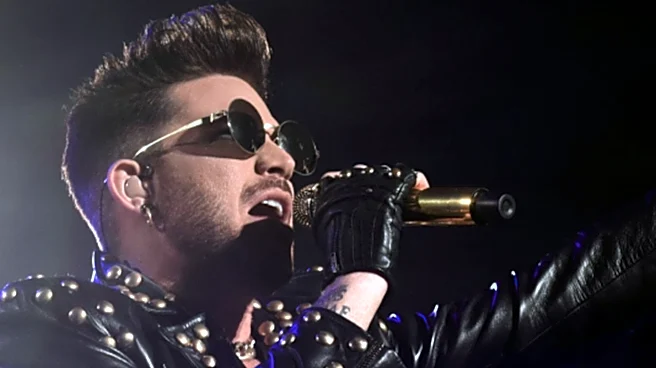
Adam Lambert, known for his rise to fame as the runner-up on the eighth season of American Idol, has shared insights into his career journey, particularly his experience joining the iconic band Queen. Lambert, who began fronting Queen in 2012, faced initial
apprehension from fans protective of Freddie Mercury's legacy. Despite this, he embraced the opportunity to perform with the band, which he first met during an American Idol finale performance. Lambert's career has been marked by significant milestones, including his second album, Trespassing, which was the first by an openly gay male artist to top the Billboard 200. He has also made notable appearances on Broadway and continues to release solo music, with his sixth album, Adam, recently launched.
Why It's Important?
Lambert's journey highlights the challenges and opportunities faced by artists stepping into roles previously held by legendary figures. His experience underscores the delicate balance between honoring a legacy and establishing one's own identity. For the music industry, Lambert's success with Queen demonstrates the potential for new collaborations to revitalize classic bands, attracting both loyal fans and new audiences. His story also reflects broader societal shifts towards greater acceptance and representation of LGBTQ+ artists in mainstream media, contributing to ongoing cultural conversations about diversity and inclusion in entertainment.
What's Next?
Lambert continues to perform and release new music, with upcoming shows and projects that may further solidify his place in the music industry. As he navigates his career, Lambert's focus on authenticity and creative expression suggests he will continue to engage with both his existing fan base and new listeners. The ongoing evolution of his career may also influence other artists considering similar paths, encouraging them to embrace opportunities that challenge traditional norms and expectations.
Beyond the Headlines
Lambert's story offers a deeper look into the pressures faced by artists in the public eye, particularly those who break new ground in terms of representation. His experiences with public scrutiny and the need to prove himself to fans of Queen highlight the complexities of navigating fame while staying true to one's artistic vision. This narrative also touches on the broader cultural dynamics of fan loyalty and the ways in which artists can both honor and innovate upon established legacies.