



What's Happening?
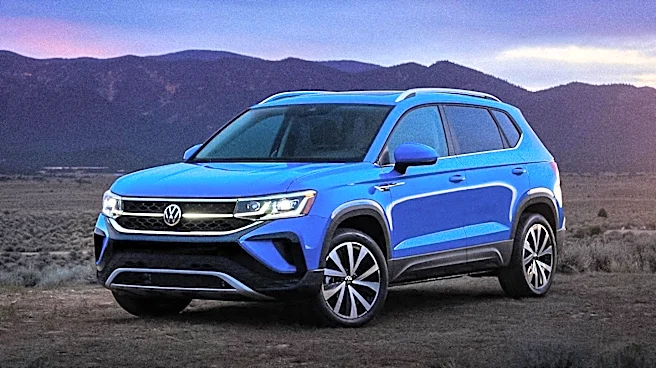
Volkswagen AG Chief Executive Officer Oliver Blume has indicated that the company is looking to rugged SUVs and pickups, similar to the Jeep Wrangler and Ford F-150, to revitalize its U.S. business. The automaker is exploring new Volkswagen and Audi models
specifically designed for American consumers. Blume informed investors that the Volkswagen Group currently lacks vehicles built on ladder frames, which are the robust, truck-style foundations essential for serious off-roaders and pickups highly favored in the U.S. market. This strategic shift aims to address a gap in their current product offerings and cater to American buyer preferences. The company plans to manufacture these new vehicles within the U.S. to support this initiative.
Why It's Important?
This strategic pivot by Volkswagen Group is significant for the U.S. automotive market as it signals a major European automaker's intent to directly compete in the highly lucrative and popular truck and SUV segments. The U.S. market has a strong demand for these types of vehicles, and Volkswagen's current portfolio has not fully capitalized on this trend. By introducing ladder-frame vehicles, Volkswagen aims to capture a larger share of American consumers who prioritize durability, off-road capability, and utility. This move could intensify competition among automakers, potentially leading to more innovation and diverse options for consumers in the SUV and pickup truck categories. Success in this segment could significantly boost Volkswagen's sales and market presence in the U.S., while failure could further entrench its 'flagging' business status in the region.
What's Next?
Volkswagen Group is expected to proceed with the development and design of these new rugged SUV and pickup models tailored for the U.S. market. The next steps will likely involve detailed market research, engineering and design phases, and the establishment or adaptation of manufacturing facilities within the U.S. to produce these vehicles. We can anticipate announcements regarding specific model concepts, production timelines, and investment plans in the coming months or years. The company will also need to build out its marketing and distribution strategies to effectively introduce these new offerings to American buyers, potentially challenging established players like Ford and Jeep in their core segments. The success of this initiative will depend on Volkswagen's ability to deliver vehicles that meet the specific demands and preferences of U.S. truck and SUV enthusiasts.
Beyond the Headlines
Volkswagen's decision to focus on rugged SUVs and pickups for the U.S. market reflects a broader trend in the automotive industry where consumer preferences are shifting away from traditional sedans towards larger, more versatile vehicles. This move also highlights the cultural significance of trucks and SUVs in the American landscape, where they are often seen as symbols of utility, freedom, and adventure. For Volkswagen, a brand historically associated with compact cars and sedans, this shift represents a significant cultural and engineering challenge. It could also have long-term implications for the company's brand identity in the U.S., potentially transforming it from a European-centric automaker to one more attuned to American tastes. Furthermore, manufacturing these vehicles in the U.S. could create jobs and stimulate local economies, aligning with broader political and economic interests.