






What's Happening?
Lindian Resources Limited has announced a strategic partnership with Carester SAS, a global rare earth processing and separation specialist. This collaboration involves the execution of a Technology and Engineering Services Agreement and a long-term binding
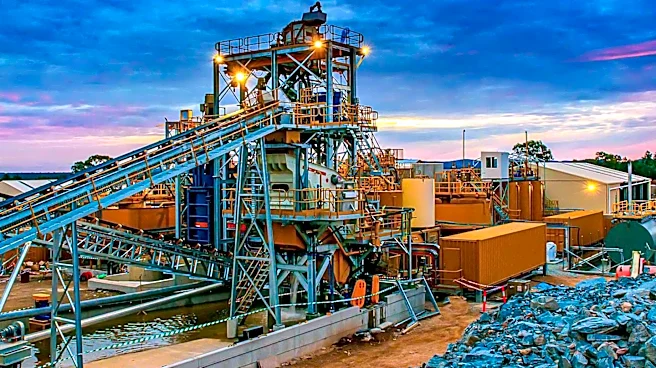
Offtake Agreement. The primary goal is the development of an Oxide Separation Facility in Stepnogorsk, Kazakhstan. Carester, in conjunction with Tetra Tech Coffey, will advance a Definitive Feasibility Study (DFS) for this new 8,000 tonne per annum REO nameplate capacity solvent extraction and oxide separation facility, with completion targeted for Q4 2026. The Offtake Agreement, spanning an initial 10 years with two five-year extension options, stipulates that Carester will purchase 70% of Mixed Heavy Rare Earths compound (SEGH) production and holds a right of first refusal for 70% of Mixed Heavy Rare Earths Carbonate (MHREC) production from SARECO. The heavy rare earths product will be supplied to the Caremag Refinery in Lacq, France, which has secured significant French and Japanese government funding. This initiative is recognized by the Ministry of Industry and Construction in Kazakhstan as strategically important for the country's rare earth ambitions.
Why It's Important?
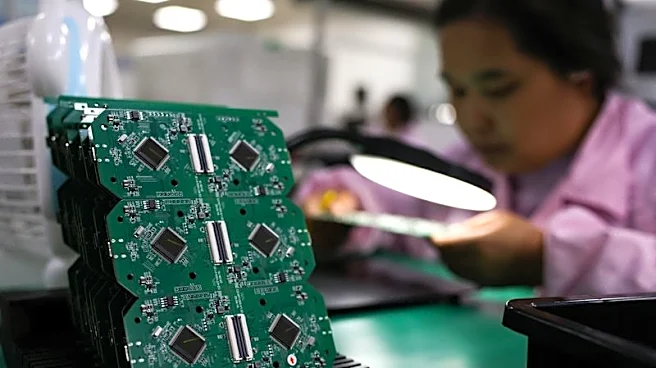
This partnership is significant for the U.S. and global rare earth supply chain, as it aims to diversify and secure the production of critical rare earth elements. The development of the Oxide Separation Facility and the long-term offtake agreement contribute to a more stable and vertically integrated supply of rare earths, which are essential for various high-tech industries, including electric vehicles, renewable energy, and defense. By establishing a robust processing platform outside of traditional dominant suppliers, this initiative can enhance supply chain resilience and reduce reliance on single sources, thereby mitigating potential geopolitical risks and supply disruptions. The involvement of French and Japanese funding in the Caremag Refinery further underscores the international strategic importance of securing these materials. For U.S. industries, a diversified and stable supply of rare earths can lead to more predictable pricing and availability, fostering innovation and manufacturing capabilities in sectors critical to national security and economic growth.
What's Next?
The immediate next step is the completion of the Definitive Feasibility Study (DFS) for the Oxide Separation Facility by the end of 2026. Following the DFS, the project will move towards full commissioning, with initial production from Kangankunde and SARECO operations expected in Q4 2026. Lindian Resources plans to host an investor webcast and briefing to provide further details on the strategic partnership, the DFS, and its long-term supply agreement. The company is also actively evaluating additional rare earth feed sources within Kazakhstan to support increased utilization and future expansion of the SARECO facility and the proposed 8,000tpa REO SX Facility. The Ministry of Industry and Construction in Kazakhstan has pledged its support to facilitate the successful development of this project, indicating continued governmental backing. This will likely involve ongoing regulatory approvals and infrastructure development to support the facility's operations.
Beyond the Headlines
This strategic partnership extends beyond mere commercial transactions, touching upon critical geopolitical and economic themes. The push for a vertically integrated 'mine-to-oxide' rare earth production pathway reflects a broader global effort to establish secure and independent supply chains for critical raw materials. The project's recognition by the Kazakhstan government as strategically important highlights the growing awareness among nations of the economic and strategic value of rare earth elements. This initiative could set a precedent for other countries seeking to develop their own rare earth processing capabilities, potentially leading to a more distributed and competitive global market. Furthermore, the focus on high-value magnet rare earth oxides like dysprosium, terbium, and yttrium underscores their increasing demand in advanced technologies, making this project a key player in the future of artificial intelligence, robotics, e-mobility, and renewable energy sectors. The collaboration also demonstrates how industrial cooperation can reinforce critical raw materials value chains, fostering international partnerships in strategically important sectors.