






What's Happening?
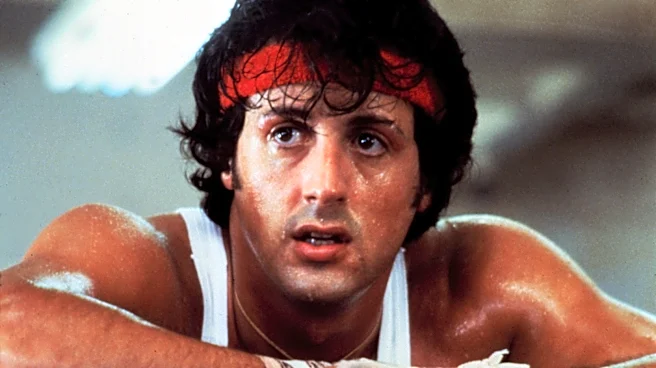
During an appearance on 'The Tonight Show Starring Jimmy Fallon', Sylvester Stallone discussed how he successfully advocated for a change to the original ending of his iconic 1976 film, 'Rocky'. Stallone recounted that the initial conclusion of the movie
depicted Rocky Balboa and Adrian walking out of the arena after the fight, with the scene quickly forgotten amidst trash, which he found 'kind of depressing'. He explained that the original ending showed their moment passing quickly, leaving a somber impression. Stallone 'begged' the producer to alter this ending, despite being told there was no money for reshoots. He managed to gather about 12 people and construct a partial ring to film the now-famous heartwarming conclusion where Rocky embraces Adrian, focusing on their love rather than the fight's outcome. This revised ending, where Rocky loses the fight but proves his worth and finds love, became one of cinema's most iconic finales.
Why It's Important?
This revelation from Sylvester Stallone highlights the significant impact of creative vision and persistence in filmmaking, particularly in shaping cultural touchstones. The 'Rocky' ending, as it exists today, is celebrated for its emotional resonance and its message that personal victory can transcend conventional success. Had the original 'depressing' ending been retained, the film's legacy and its subsequent influence on sports dramas and underdog narratives might have been vastly different. This change underscores how critical decisions during production can alter a film's reception, its place in cinematic history, and its ability to inspire audiences. It also demonstrates the power of an actor-writer like Stallone to fight for his artistic interpretation, ultimately leading to a more impactful and enduring piece of art that resonated deeply with the American public.
What's Next?
While this specific revelation pertains to a historical film production, it contributes to the ongoing discourse surrounding classic cinema and the creative processes behind it. Such insights often lead to renewed interest in the film, potentially sparking re-evaluations or special screenings. For filmmakers and screenwriters, Stallone's story serves as a testament to the importance of advocating for one's artistic vision, even against financial constraints. It may also encourage future discussions on 'The Tonight Show' and similar platforms, where celebrities share behind-the-scenes stories that offer valuable context to their most famous works. This kind of historical detail enriches the understanding of film history and the collaborative nature of movie-making.
Beyond the Headlines
The story of 'Rocky's' altered ending delves into the deeper psychological and emotional impact of narrative conclusions. Stallone's insistence on a 'high note' ending reflects a fundamental understanding of audience connection and the desire for hope and triumph, even in defeat. This decision transformed 'Rocky' from a potentially bleak sports drama into an enduring symbol of perseverance and love. It highlights how art can shape public sentiment and offer aspirational messages. The film's ending, focusing on the personal connection between Rocky and Adrian rather than the boxing match's outcome, elevated the story beyond a mere sports event, embedding it with universal themes of human connection and the pursuit of personal fulfillment. This artistic choice ultimately contributed to the film's lasting cultural impact and its status as a beloved American classic.