




What's Happening?
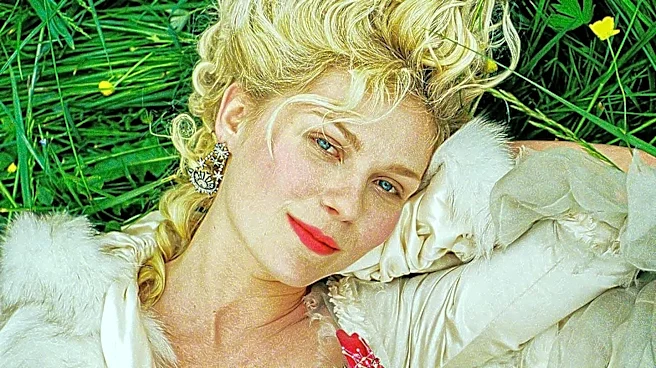
Kirsten Dunst, an American actress, has built a career characterized by a wide range of roles across Hollywood films, independent cinema, and television. She gained early recognition for her role as Claudia in 'Interview with the Vampire,' showcasing
poise and intelligence in a complex character. Her versatility continued with roles in 'Little Women' and 'Jumanji,' where she brought alertness and mischief to family dramas and fantasy adventures. As an adult, Dunst explored different genres, from the comic timing in 'Dick' and 'Drop Dead Gorgeous' to the quieter, more elusive performance in Sofia Coppola's 'The Virgin Suicides.' Her role in 'Bring It On' established her as a leading performer in studio comedies. Dunst further expanded her reach with the 'Spider-Man' trilogy as Mary Jane Watson, grounding the heightened action with recognizable shifts of trust and fear. She also took on contrasting material like 'Eternal Sunshine of the Spotless Mind' and 'Marie Antoinette.' More recently, Dunst has gravitated towards roles in tense, morally unstable environments, such as Rose in 'The Power of the Dog' and Lee, a veteran photojournalist, in 'Civil War,' demonstrating professional detachment and physical alertness.
Why It's Important?
Kirsten Dunst's career trajectory highlights the evolving landscape of acting in the U.S. entertainment industry, demonstrating how performers can successfully navigate both mainstream blockbusters and critically acclaimed independent projects. Her ability to transition between diverse genres and character types, from a child star to a leading lady in superhero films and then to complex dramatic roles, showcases a significant level of artistic adaptability. This versatility allows her to appeal to a broad audience while also engaging with more nuanced and challenging material, contributing to the artistic depth of American cinema and television. Her performances in films like 'Melancholia,' which earned her the Best Actress prize at Cannes, and her television work in 'Fargo' and 'On Becoming a God in Central Florida,' underscore the value of actors who can bring psychological intensity and nuanced character development to their roles. This approach not only enriches the viewing experience but also influences casting trends and the types of stories that receive funding and distribution in the U.S. market, emphasizing talent over strict genre adherence.
What's Next?
Kirsten Dunst's recent roles in 'The Power of the Dog' and 'Civil War' suggest a continued focus on projects that offer complex characters and explore challenging themes. Given her history of balancing mainstream appeal with artistic integrity, it is likely she will continue to seek out diverse roles that allow her to showcase her range. Her involvement in films that delve into 'tense, morally unstable environments' indicates a preference for narratives that offer deeper social or psychological commentary. This could lead to further collaborations with acclaimed independent directors and appearances in prestige television series, which often provide more opportunities for character-driven performances. Her established reputation for delivering compelling performances in both large-scale productions and intimate dramas positions her to remain a sought-after talent in the U.S. film and television industry, potentially influencing the types of projects that are greenlit and the caliber of acting expected in them.
Beyond the Headlines
Kirsten Dunst's career reflects a broader shift in the entertainment industry where the lines between 'mainstream' and 'independent' acting careers have blurred. Her success in both spheres challenges the traditional categorization of actors and highlights the increasing value placed on versatility and artistic depth. This trend allows actors to pursue projects based on creative merit rather than solely commercial appeal, fostering a more diverse and artistically rich cinematic landscape in the U.S. Her choice of roles, particularly those exploring psychological intensity and morally ambiguous situations, contributes to a cultural dialogue about complex human experiences. Furthermore, her longevity and consistent critical acclaim, from child actor to adult star, offer a compelling narrative about navigating the pressures of Hollywood while maintaining artistic integrity, serving as a model for aspiring actors and influencing industry perceptions of career sustainability.