


What's Happening?
The IEEE-RAS International Conference on Humanoid Robots is set to take place from December 6-9, 2026, at the Santa Clara Convention Center. This year's theme, 'Humanoids and the Future of Work,' reflects the significant advancements in humanoid robotics,
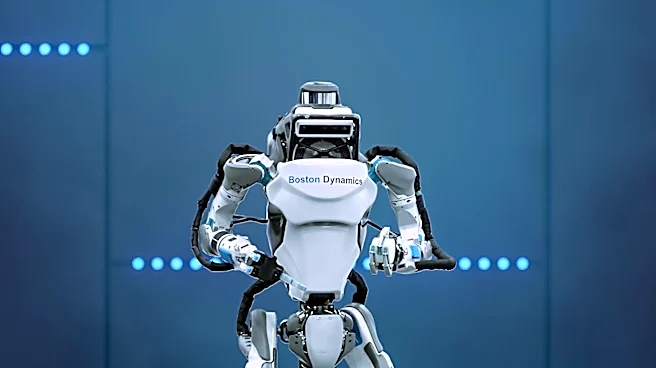
which have reached a point where economic consequences are now a primary concern. The conference will feature discussions on the deployment of humanoid robots in commercial settings, with companies like Boston Dynamics and Figure AI already integrating these robots into production lines. The event will also include the Loco-Manipulation Challenge, a competition that tests robots' abilities to perform tasks requiring both mobility and manipulation, crucial for real-world applications.
Why It's Important?
The conference underscores a pivotal moment in robotics, where humanoid robots are transitioning from experimental to commercial use, impacting industries such as automotive and logistics. This shift raises questions about labor displacement and the future of work, as robots begin to take on roles traditionally held by human workers. The economic implications are significant, with projections indicating a rapid growth in the humanoid robot market. This development could lead to increased efficiency and productivity but also poses challenges for workforce adaptation and job security.
What's Next?
As humanoid robots become more prevalent in industries, stakeholders will need to address the ethical and social challenges of their deployment. This includes ensuring fair labor practices and safety standards, as well as considering the economic impact on workers. The conference will likely influence future policies and business strategies as companies and governments navigate the integration of robotics into the workforce. The outcomes of the Loco-Manipulation Challenge and other conference discussions will provide valuable insights into the current capabilities and limitations of humanoid robots.
Beyond the Headlines
The deployment of humanoid robots raises broader questions about the role of technology in society and the balance between innovation and human employment. As robots become more capable, there is a need for ongoing dialogue about their impact on social structures and the economy. The conference's focus on diverse speaker lineups and international collaboration highlights the global nature of these challenges and the importance of inclusive discussions in shaping the future of work.