







What's Happening?
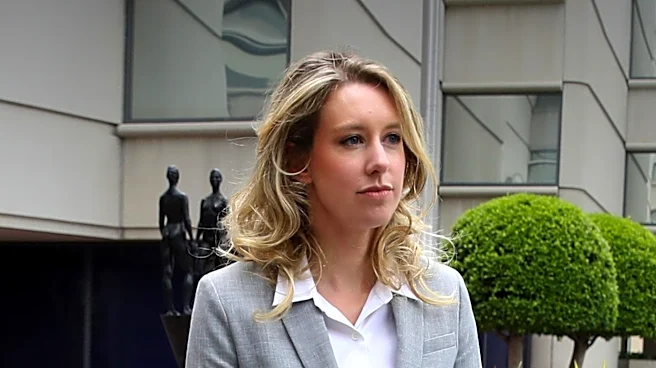
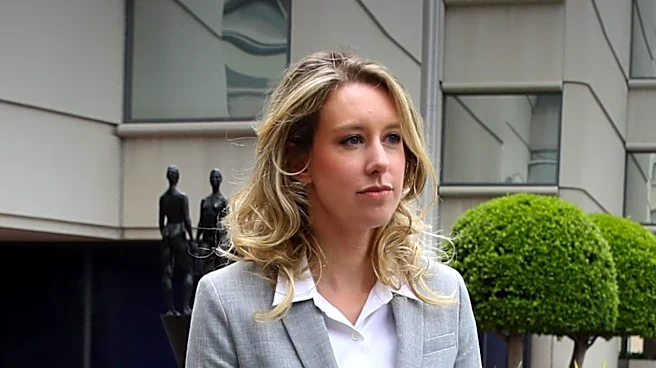
The documentary 'You Can See Everything,' focusing on disgraced Theranos founder Elizabeth Holmes, has achieved a significant box office success. Directed by Nathan Fielder and Lance Oppenheim, the film grossed $15 million, nearly doubling its initial
forecasts. This performance marks the largest non-concert documentary debut since Michael Moore's 'Fahrenheit 9/11.' Elizabeth Holmes, who is currently serving an 11-year federal sentence, has, in this context, 'finally beat her projections,' with the reported numbers being genuine. This financial success contrasts sharply with other recent documentary releases, such as Alex Gibney's four-hour film on Elon Musk, which opened to only $69,321.
Why It's Important?
The unexpected box office success of 'You Can See Everything' highlights a strong public interest in true-crime narratives and the downfall of prominent figures, particularly those involved in high-stakes business and technology. This performance suggests that audiences are drawn to stories that delve into complex ethical dilemmas and the consequences of ambition, even when the subject is controversial. For the documentary film industry, this success could signal a viable market for non-concert, investigative features, potentially encouraging more investment in such projects. It also underscores the power of compelling storytelling and directorial vision, as Fielder and Oppenheim managed to capture significant public attention despite the subject matter being widely covered in other media. The film's performance also contrasts with the reception of other documentaries, indicating that subject matter and narrative approach play a crucial role in commercial viability.
Beyond the Headlines
The success of 'You Can See Everything' delves deeper into societal fascination with narratives of hubris and downfall, particularly within the tech industry. Elizabeth Holmes' story, marked by grand promises and eventual fraud, taps into a collective skepticism about unchecked innovation and the cult of personality often surrounding Silicon Valley figures. The film's ability to draw such a large audience suggests a public appetite for critical examinations of power, ethics, and accountability in the business world. This phenomenon also raises questions about the nature of public interest in figures who have faced severe legal consequences; whether it's driven by a desire for understanding, schadenfreude, or a cautionary tale. The documentary's financial triumph, especially when compared to other releases, indicates that the public is highly selective about which real-life stories they choose to engage with on the big screen, favoring those that offer a blend of drama, intrigue, and moral complexity.