




What's Happening?
Francesco Bonami, an Italian curator who also holds US citizenship, has been appointed as the artistic director of the GES-2 House of Culture in Moscow. This appointment occurs amidst a period of strained relations between Russia and Europe, particularly
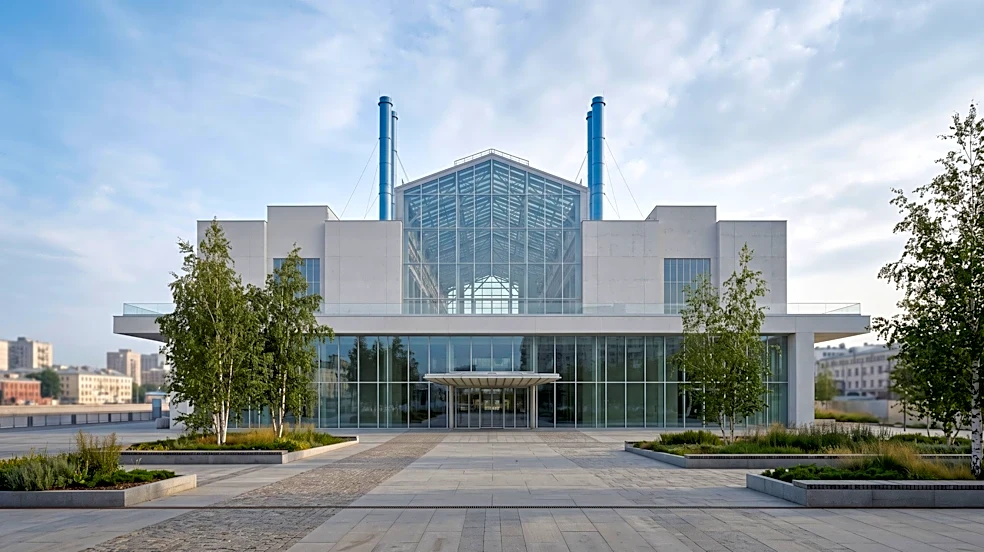
due to the ongoing invasion of Ukraine. GES-2, an institution opened in 2021 by billionaire Leonid Mikhelson's V-A-C Foundation, is housed in a former power plant opposite the Kremlin. Bonami has a notable curatorial background, having served as artistic director of the 50th Venice Biennale in 2003, co-curator of Manifesta 3 (2000) and the Whitney Biennial (2010), and a senior curator at the Museum of Contemporary Art, Chicago. He has collaborated with the V-A-C Foundation since 2010 and previously co-curated an exhibition exploring Russian art's role in 20th-century innovation. Bonami is quoted in GES-2's press release stating his role is to 'catalyse artistic energy' and 'search for the best projects.'
Why It's Important?
Bonami's appointment is significant due to its timing and the geopolitical context. While Europe has largely condemned Russia culturally, with the European Union pulling Venice Biennale funding over Russia's participation, Italy has shown more openness. This appointment highlights a divergence in cultural policy among European nations regarding engagement with Russian institutions. For the US, the involvement of a US citizen in a prominent Russian cultural institution during a period of international tension raises questions about cultural diplomacy and individual agency. Bonami's past statement that 'Sanctions are economic, not cultural. To sanction culture is a white crime that kills people’s souls' underscores a perspective that advocates for the separation of art and politics, a view that is increasingly contentious. The GES-2 House of Culture, funded by a billionaire not personally sanctioned, continues to operate as a significant cultural entity in Moscow, and Bonami's leadership will shape its artistic direction and international profile.
What's Next?
Bonami's tenure as artistic director will likely involve developing new exhibitions and programs for GES-2, aiming to 'catalyse artistic energy' and identify 'the best projects.' His appointment may lead to increased scrutiny from international art communities, particularly those advocating for a cultural boycott of Russia. The institution's statement emphasizes its commitment to 'dialogue and exchange' with artists and cultural practitioners from any country, suggesting an intent to maintain an international outlook despite political tensions. It remains to be seen how Bonami's US citizenship will be perceived and utilized by both Russian and international stakeholders. The ongoing debate about the role of culture during conflict will continue to frame discussions around GES-2's activities and Bonami's leadership. Future programming at GES-2 will be closely watched for its thematic choices and its engagement with global artistic trends.
Beyond the Headlines
This appointment delves into the complex and often contentious relationship between art, politics, and international relations. Bonami's decision to take on this role in Moscow challenges the prevailing narrative of cultural isolation for Russia, prompting a re-evaluation of whether cultural engagement can or should transcend political divides. The situation highlights the ethical dilemmas faced by artists and curators when navigating geopolitical conflicts, particularly when institutions are funded by individuals with ties to the state. The emphasis on Bonami's US citizenship by a Russian cultural commentator underscores the symbolic weight of such appointments. This event also brings to the forefront the debate about 'cancel culture' in the arts and whether cultural sanctions are an effective or appropriate tool in international diplomacy. It raises questions about the universal nature of art versus its embeddedness in national and political contexts, and the potential for cultural institutions to serve as bridges or battlegrounds in times of conflict.