


What's Happening?
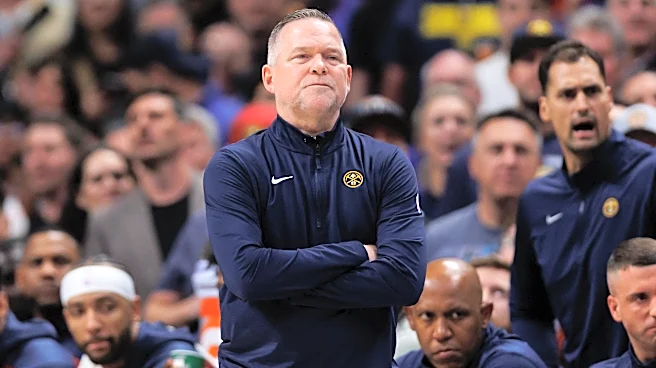
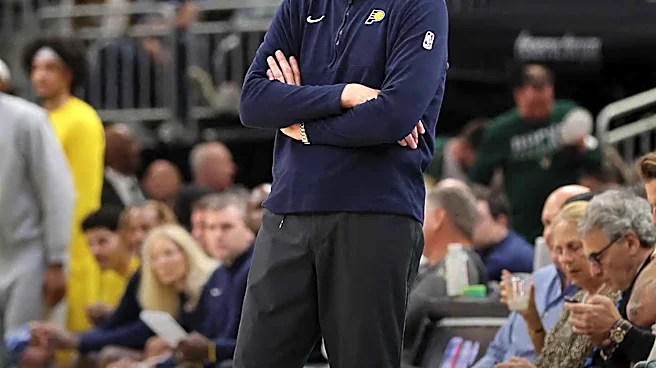
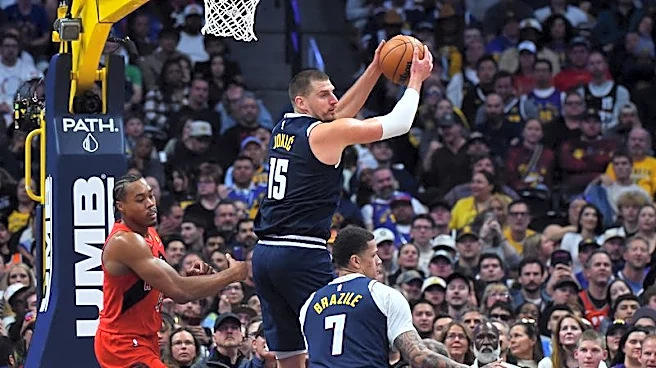
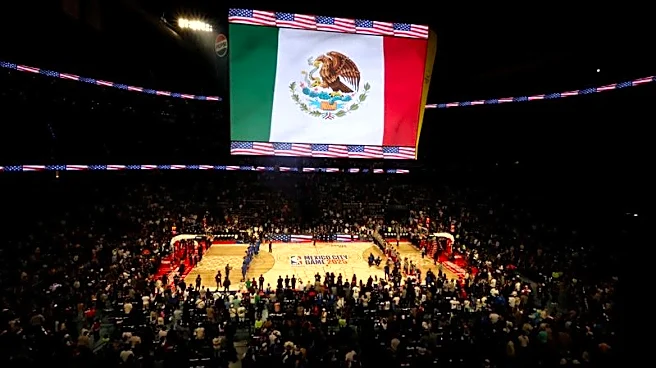
During the NBA Mexico City Game 2026, Indiana Pacers Head Coach Rick Carlisle made frequent substitutions to manage his team's performance against the Denver Nuggets, particularly in response to the high altitude. The Pacers, despite falling behind by
as many as 27 points, mounted a significant comeback, narrowing the deficit to single digits in the fourth quarter before ultimately losing 114-102. All 13 active players saw significant playing time, with 12 playing double-digit minutes, a direct result of Carlisle's strategy to combat the effects of the 7,350-feet elevation. Veteran point guard T.J. McConnell made his season debut, playing nine minutes in the first half as he recovers from a hamstring strain. Larry Nance Jr. was a standout, scoring 15 points off the bench, including five three-pointers, matching a career high.
Why It's Important?
The strategic decisions made by Coach Carlisle in the Mexico City game highlight the unique challenges faced by NBA teams playing at high altitudes and in international venues. Managing player fatigue and performance under such conditions is crucial for player safety and competitive integrity. The game also showcased the Pacers' resilience and depth, as multiple players contributed significantly to the comeback effort. For the NBA, these international games are vital for global brand expansion, but they also necessitate careful consideration of player welfare and logistical planning. The experience gained from playing in such environments can be invaluable for teams, preparing them for diverse conditions they might encounter in future seasons or playoff scenarios.
What's Next?
Following the Mexico City game, the Pacers will return to their regular NBA schedule, likely focusing on player recovery and reintegration, especially for T.J. McConnell as he works back from his hamstring injury. The insights gained from playing at high altitude may influence future training and travel protocols for international games. The team will also need to build on the positive aspects of their second-half comeback, translating that resilience into more consistent performances in upcoming games. The strong showing by players like Larry Nance Jr. could lead to increased roles or confidence within the team's rotation. The NBA will continue to evaluate the impact of international games on player health and team performance as it plans future global initiatives.
Beyond the Headlines
The NBA's continued push for international games, such as the one in Mexico City, reflects a broader strategy to globalize the sport and expand its fan base. While these games offer exciting opportunities for international fans to experience live NBA action, they also present logistical and physiological challenges for players. The altitude in Mexico City, significantly higher than most NBA venues, underscores the need for specialized preparation and in-game management strategies. This global expansion also raises questions about the potential for future NBA franchises in international cities, and how such developments would impact the league's structure, travel demands, and player well-being. The cultural exchange and fan engagement witnessed in Mexico City demonstrate the universal appeal of basketball, but also the complexities of operating a global sports league.