





What's Happening?
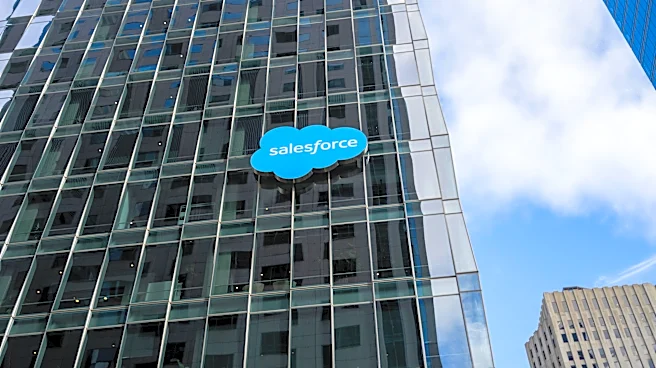
Salesforce has reportedly begun another round of job cuts across various teams, with employees discussing recent departures internally. While the exact number of affected workers remains undisclosed, these layoffs follow earlier reductions in 2026, including
86 positions eliminated in California in August and fewer than 1,000 jobs cut in January across different departments. These workforce reductions coincide with Salesforce's increased focus on artificial intelligence, including the introduction of monthly AI token spending limits for employees. The company's stock is experiencing its steepest weekly decline since April, reflecting investor concerns about AI-driven disruption in the software industry and the financial implications of its planned $5.6 billion Braze deal.
Why It's Important?
These layoffs at Salesforce highlight the ongoing transformation within the technology sector, particularly as companies navigate the integration of artificial intelligence. The job cuts, coupled with increased AI investment and spending limits, suggest a strategic shift towards optimizing resources and potentially reallocating talent to AI-focused initiatives. For the broader software industry, Salesforce's actions could signal a trend where established companies streamline operations and adapt their workforce to leverage AI, potentially leading to job displacement in traditional roles while creating new opportunities in AI development and implementation. Investor concerns reflect uncertainty about how AI will impact demand for existing enterprise software and the financial viability of large acquisitions in this evolving landscape, making Salesforce's strategy a bellwether for the industry.
What's Next?
Salesforce will likely continue to refine its workforce strategy as it deepens its commitment to AI. Further internal reorganizations and potential shifts in hiring priorities towards AI-related roles can be anticipated. The company's financial performance and investor sentiment will be closely watched, particularly regarding how its AI investments translate into revenue growth and how the Braze acquisition impacts its balance sheet. Other technology companies may observe Salesforce's approach to AI integration and workforce management as they consider their own strategies. Employees in the tech sector may face increased pressure to adapt their skills to align with the growing demand for AI expertise.
Beyond the Headlines
The situation at Salesforce reflects a broader industry-wide tension between technological advancement and workforce stability. While AI promises increased efficiency and innovation, its adoption often necessitates difficult decisions regarding human capital. The introduction of AI token spending limits also points to the practical challenges and costs associated with integrating advanced AI tools into daily operations. This scenario raises questions about the future of work in the tech industry: will AI primarily augment human capabilities, or will it lead to significant job displacement? The ethical implications of AI-driven workforce changes, including the responsibility of companies to retrain or support affected employees, will become increasingly prominent as this trend continues to unfold across the sector.