




What's Happening?
Integrated Biosciences, Inc., a scientific discovery company based in Redwood City, CA, is actively recruiting a Software Engineer specializing in Robotics. The company is building a 'closed-loop discovery engine' that integrates AI models for hypothesis
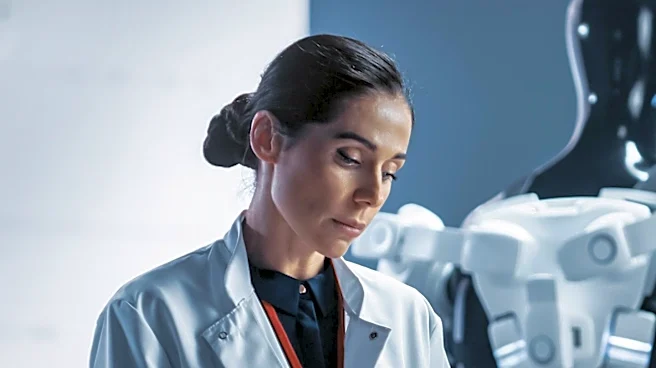
generation with high-throughput experiments using living systems, creating a feedback loop to refine these models. The robotics software engineer will be crucial in closing this physical loop, focusing on building systems such as data pipelines, services, interfaces, and the control and learning stack for their manipulation station. This role also involves managing the hardware aspects of the station, including mounting, calibration, and deployment, and writing application and infrastructure code. Integrated Biosciences aims to translate multimodal biological datasets into novel therapeutics using its drug design platform and AI models, with a mission to cure age-related diseases.
Why It's Important?
This job opening at Integrated Biosciences underscores a significant trend in the U.S. biotechnology and pharmaceutical sectors: the increasing reliance on robotics and artificial intelligence to accelerate drug discovery. By automating experimental processes and integrating AI-driven hypothesis generation, the company aims to drastically reduce the time and cost associated with bringing new therapies to market. This approach could lead to breakthroughs in treating age-related diseases, impacting public health and extending human lifespan. For the U.S. economy, this signifies growth in high-tech job creation and potential leadership in advanced medical research. The role's emphasis on both software and hardware expertise highlights the interdisciplinary nature of modern scientific innovation, attracting top talent from engineering and computer science fields to address complex biological challenges.
What's Next?
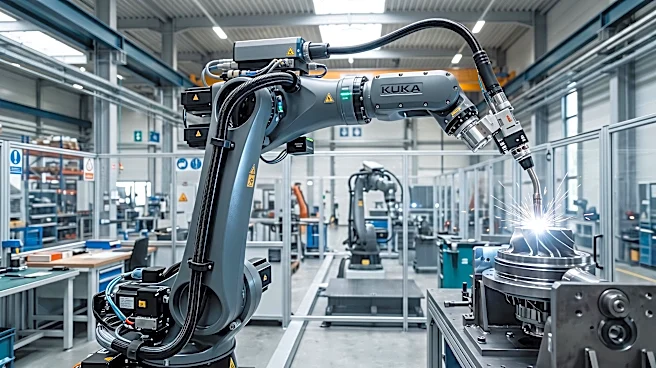
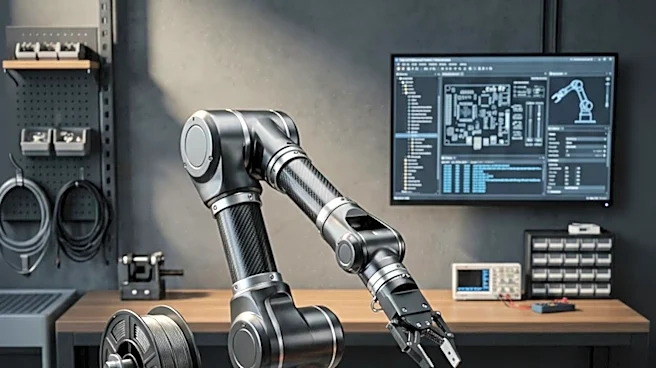
The successful candidate for the Robotics Software Engineer position will play a pivotal role in shaping the direction of Integrated Biosciences, with the expectation of developing a functional physical system within a year. This will involve building software for robot utility, teleoperation and data-capture pipelines, and owning the robotic manipulation station end-to-end. The company plans to train, evaluate, and deploy manipulation policies for laboratory tasks like liquid handling and plate manipulation, and integrate the robot into their broader AI agent harness. The goal is to automate experimental workflows and measure the efficiency gains. This initiative is expected to directly advance therapies with the potential to transform healthcare, particularly in the realm of age-related diseases.
Beyond the Headlines
The integration of robotics and AI in drug discovery raises profound implications for the future of scientific research and healthcare. Ethically, it prompts discussions about the role of automation in scientific inquiry and the potential impact on human employment in laboratory settings. Legally, the intellectual property generated by AI-driven robotic systems will be a complex area, particularly regarding inventorship and ownership. Culturally, it represents a paradigm shift in how we approach disease, moving towards a highly automated, data-intensive, and predictive model of medical intervention. This could lead to a future where drug development is significantly faster and more targeted, but also one that requires a highly specialized workforce capable of managing and innovating within these advanced technological frameworks.