


What's Happening?
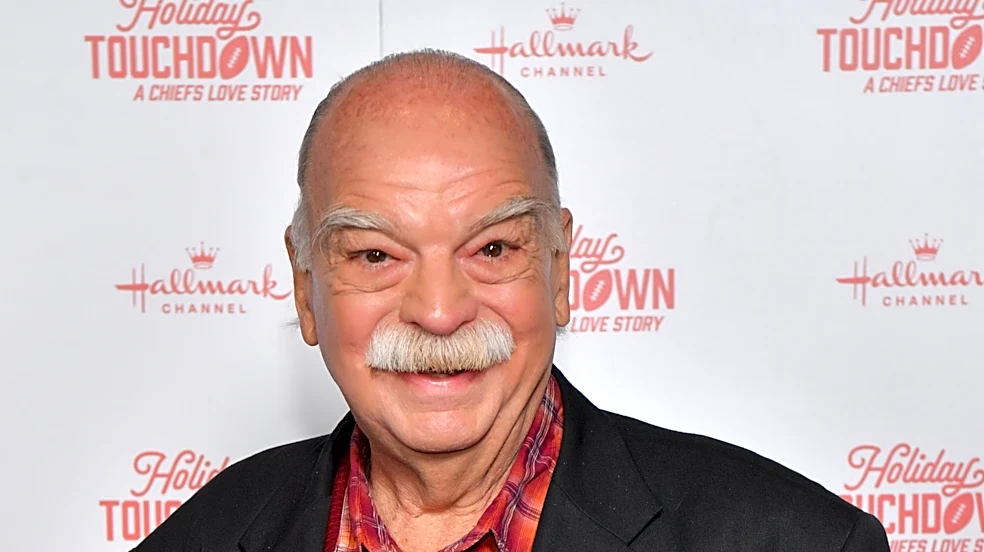
Frank Mancuso, a prominent Hollywood executive who led Paramount Pictures and later Metro-Goldwyn-Mayer/United Artists, passed away on October 1 at his Los Angeles home at the age of 93 due to complications from lung cancer. Mancuso, known as 'Gentleman
Frank,' built his career in sales, marketing, and distribution, a rare path for a studio mogul. He served as chair and CEO of Paramount Pictures from 1984 to 1991, overseeing hits like 'Top Gun,' 'Ghost,' and 'Fatal Attraction.' During his tenure at Paramount, he was instrumental in pioneering the use of music videos and soundtracks for movie promotion, contributing to the success of films such as 'Saturday Night Fever' and 'Flashdance.' After an acrimonious departure from Paramount in 1991, Mancuso revitalized Metro-Goldwyn-Mayer/United Artists from 1993 to 1999, reducing debt, restoring production, and orchestrating the studio's sale. He also revived the James Bond franchise with films like 'GoldenEye.'
Why It's Important?
Mancuso's career significantly impacted the Hollywood landscape of the 1980s and 1990s, shaping how films were marketed and distributed globally. His strategic vision at Paramount led to a string of box-office successes that defined an era of blockbuster cinema. His ability to identify and nurture talent, as recalled by Sherry Lansing, who he supported after initial box-office disappointments, fostered an environment where filmmakers felt empowered to take risks. His leadership in turning around MGM/United Artists demonstrated his capacity to navigate complex financial and creative challenges, preserving a historic studio and its iconic franchises, including James Bond. His approach to film releases, often defying conventional wisdom, proved successful, as seen with 'Terms of Endearment' and 'Ordinary People,' influencing industry practices for release windows.
What's Next?
While Mancuso's direct influence on current Hollywood operations has concluded with his passing, his legacy continues to shape the industry. The strategies he employed in marketing and distribution, particularly the integration of music and film, remain relevant in contemporary promotional campaigns. The studios he led, Paramount and MGM (now part of Amazon MGM Studios), continue to be major players in film production and distribution, carrying forward some of the foundational structures and franchise developments he oversaw. His career serves as a historical benchmark for studio leadership, offering insights into the dynamics of Hollywood during a period of significant growth and transformation before the advent of widespread digital distribution and streaming platforms.
Beyond the Headlines
Mancuso's career reflects a bygone era of Hollywood, characterized by long-term studio loyalty and a more personal approach to executive leadership. His reputation as 'Gentleman Frank' highlights a leadership style that prioritized relationships and integrity, a contrast to the often cutthroat image of the industry. His ability to transition from a sales and marketing background to leading major studios underscores the importance of diverse skill sets in entertainment management. The evolution of the film business, marked by corporate mergers and the rise of streaming, has fundamentally altered the landscape Mancuso operated in, making his career a testament to a 'time that doesn't exist anymore,' as noted by his daughter. His story offers a valuable perspective on the cultural and business shifts within the American film industry over several decades.