









What's Happening?
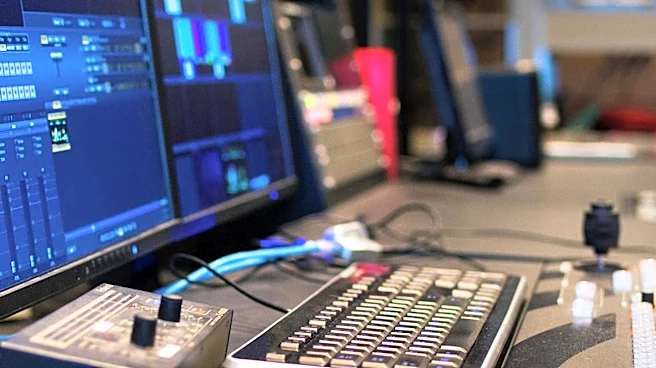
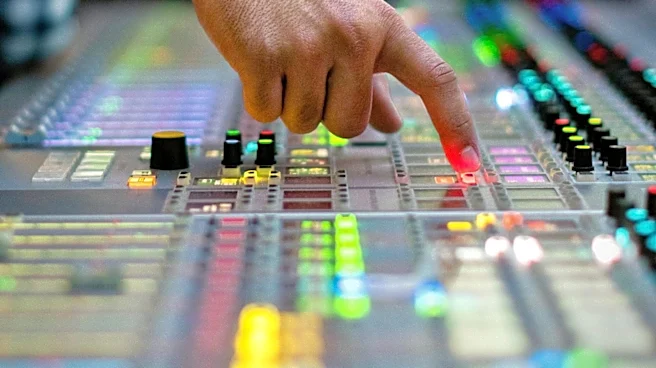
Television broadcasters are increasingly adopting remote and hybrid production models to enhance efficiency and flexibility. This shift involves moving away from traditional, facility-bound control rooms to distributed and IP-based systems. Technologies
such as KVM-over-IP and REMI workflows are central to this transition, allowing broadcasters to centralize control and access production resources from various locations. Industry experts highlight the importance of low-latency solutions and secure remote access to maintain the quality and responsiveness of live broadcasts. This evolution is driven by the need to optimize resource use and reduce travel, while still delivering high-quality content.
Why It's Important?
The move to remote production is reshaping the broadcasting industry, offering significant operational and economic benefits. By decentralizing control rooms, broadcasters can reduce costs associated with physical infrastructure and travel, while also making better use of specialized staff. This transition supports the industry's need for scalability and adaptability in a rapidly changing media landscape. The adoption of hybrid workflows also aligns with broader technological trends, such as the integration of cloud services and IP-based systems, which are becoming increasingly prevalent in media production. This shift could lead to more innovative content delivery and production methods, enhancing the viewer experience.
What's Next?
As broadcasters continue to implement remote production models, the focus will likely be on refining these systems to ensure seamless operation. This includes addressing challenges related to latency, security, and integration with existing infrastructure. The industry may see further advancements in automation and artificial intelligence, which could enhance remote production capabilities. Additionally, as technology evolves, broadcasters will need to continuously adapt their workflows to maintain competitive advantage and meet audience expectations. The ongoing development of IP-based solutions and cloud services will play a crucial role in shaping the future of broadcasting.