





What's Happening?
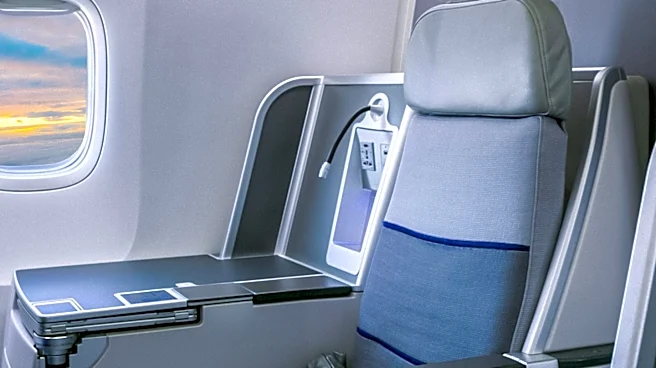
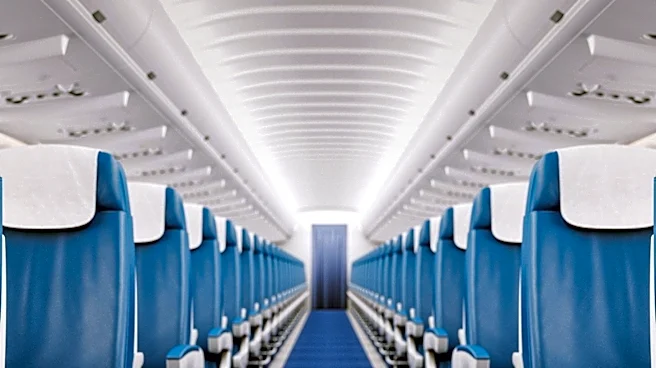
Porter Airlines is undertaking significant upgrades to the cabins of its Dash 8-400 aircraft, aiming to enhance passenger comfort and modernize its fleet. The upgrades include redesigned seat and back cushions, updated tray tables, and integrated personal
electronic device holders for hands-free viewing. Additionally, the cabins will feature LED technology, mood lighting, LED reading lights, and new carpeting. These changes are part of a broader effort to provide a more comfortable and modern flying experience. The use of carbon-fibre and titanium in the new seats is expected to make the planes lighter, thereby reducing fuel consumption and CO2 emissions. Some aircraft have already received these upgrades, and the full retrofitting of all 29 Dash 8s is anticipated to be completed by fall.
Why It's Important?
The upgrades to Porter Airlines' Dash 8-400 aircraft are significant as they reflect the airline's commitment to enhancing passenger experience and environmental responsibility. By reducing the weight of the aircraft, the airline aims to lower fuel consumption and emissions, aligning with broader industry trends towards sustainability. This move could set a precedent for other airlines to follow suit, potentially leading to industry-wide improvements in passenger comfort and environmental impact. The enhancements also position Porter Airlines as a leader in offering a modernized flying experience, which could attract more passengers and increase competitiveness in the regional airline market.
What's Next?
As Porter Airlines completes the retrofitting of its Dash 8-400 fleet, the airline may see increased passenger satisfaction and potentially higher demand for its services. The completion of these upgrades by fall will likely be followed by marketing efforts to highlight the improved passenger experience. Additionally, the airline's focus on reducing emissions may attract environmentally conscious travelers. Other airlines may observe Porter's approach and consider similar upgrades to remain competitive, potentially leading to broader industry changes in cabin design and sustainability practices.