






What's Happening?
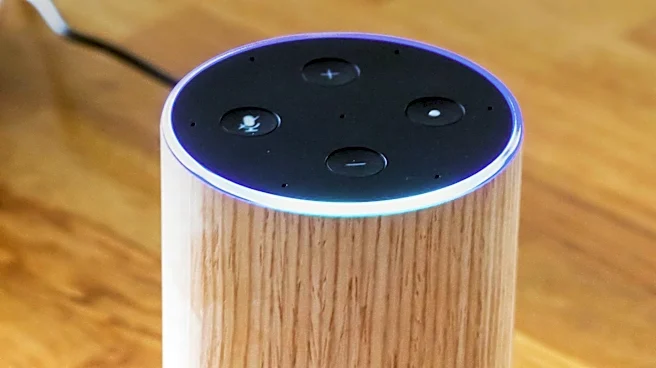
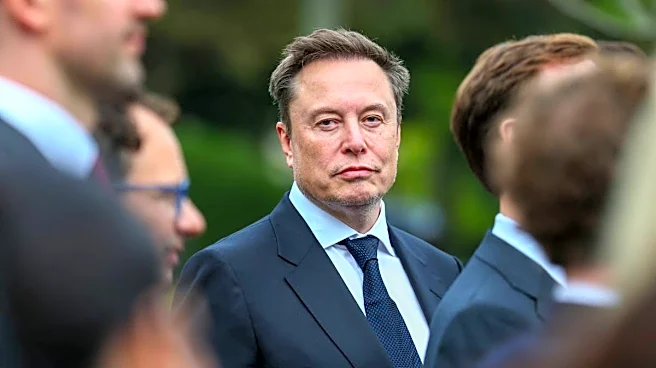
Boston Dynamics has named Rohit Prasad, formerly a Senior Vice President and Head Scientist for Alexa and Artificial General Intelligence at Amazon, as its new Chief Executive Officer. This appointment signals a strategic shift for the Hyundai Motor Co.-controlled
robotics company, aiming to accelerate the commercialization of its autonomous robotics portfolio through advanced artificial intelligence. Prasad brings over a decade of experience in productizing complex machine learning technologies, having overseen the development of the Alexa ecosystem and the launch of Amazon's Nova foundation model family. He is expected to assume the executive role on October 7 and will join the company's board of directors. This leadership change is intended to transition Boston Dynamics' humanoid platforms from experimental phases to large-scale industrial commercialization.
Why It's Important?
This executive transition is crucial for Boston Dynamics as it pivots towards 'physical AI,' a domain that integrates generative model architectures with mechanical systems for real-world navigation. The company's parent, Hyundai Motor Group, has ambitious plans to deploy Boston Dynamics' electric Atlas humanoid robots into its Georgia manufacturing facilities by 2028, with long-term goals to produce up to 30,000 humanoids annually. Prasad's expertise in enterprise deployment and consumer-scale software is expected to be a key catalyst in achieving these targets. His appointment underscores the increasing importance of AI and software leadership in the robotics sector, moving beyond traditional hardware development to focus on AI-driven operational autonomy and the creation of high-margin software recurring revenue streams atop proprietary robotic hardware.
What's Next?
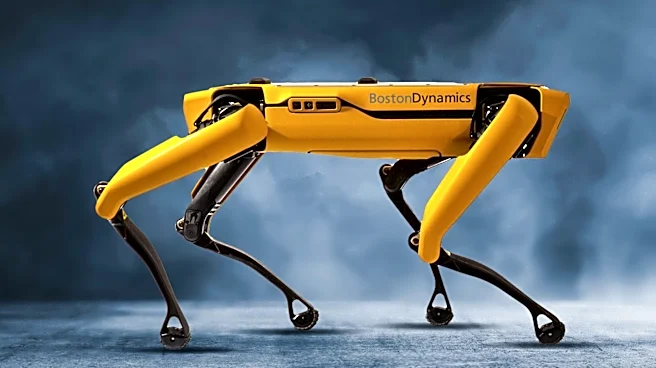
With Rohit Prasad at the helm, Boston Dynamics is poised to intensify its efforts in commercializing its robotics lineup, which includes the Spot quadruped for industrial inspection and the Stretch platform for logistics operations. The immediate focus will likely be on integrating the company's electric Atlas humanoid into Hyundai's manufacturing facilities by 2028. Prasad's leadership is expected to drive the development of software solutions that enhance the autonomy and utility of these robots, aiming to build robust recurring revenue streams. The company will also likely explore new applications and markets for its advanced AI robotics, leveraging Prasad's background in scaling complex machine learning technologies. The success of these initiatives will be critical in establishing Boston Dynamics as a leader in the rapidly evolving field of physical AI.
Beyond the Headlines
The appointment of a seasoned AI and software executive like Rohit Prasad to lead a robotics company like Boston Dynamics highlights a significant trend in the technology industry: the convergence of artificial intelligence and physical robotics. This move suggests that the future of robotics is not just about mechanical engineering but increasingly about sophisticated AI that enables robots to learn, adapt, and operate autonomously in complex environments. This shift has profound implications for various industries, from manufacturing and logistics to healthcare and defense, potentially leading to widespread automation and new forms of human-robot collaboration. The ethical and societal implications of deploying advanced AI-powered humanoid robots on a large scale, including job displacement and safety concerns, will become increasingly prominent as Boston Dynamics moves towards mass commercialization.