
What's Happening?
A biographer has shared insights into the difficulties of reporting on mega-stars, drawing parallels between her experiences with figures like Anna Wintour and Gwyneth Paltrow, and a recent Vanity Fair
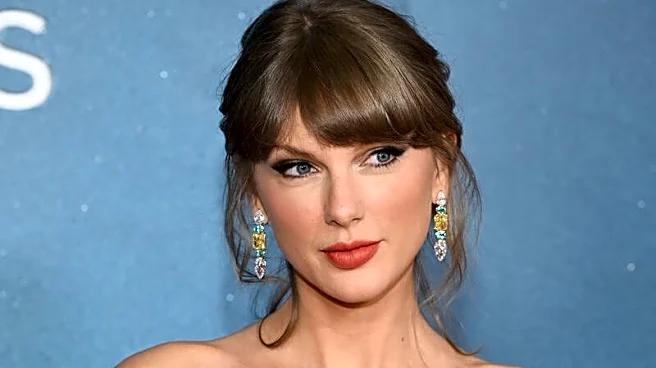
article about an unnamed 'Star,' widely believed to be Taylor Swift. The biographer noted that writer May Jeong interviewed over 100 people for the Vanity Fair piece, a process she recognizes as challenging due to stars' reluctance to be discussed. She highlights that many stars, including Gwyneth Paltrow and the subject of the Vanity Fair article, often resist being portrayed in any way other than favorably. This resistance often leads to 'puff pieces' in magazines, as stars and their teams exert significant control over their public narratives. The biographer suggests that the recent Vanity Fair article stands out because it deviates from this typical 'puff piece' format, leading to its perception as a 'hit piece.'
Why It's Important?
This discussion is important as it sheds light on the dynamics between celebrity culture, media reporting, and public perception in the U.S. It reveals how the immense power and influence of mega-stars can shape the content produced by major publications, often resulting in carefully curated and overwhelmingly positive portrayals. This phenomenon can impact the public's understanding of celebrity figures, potentially creating an unrealistic or incomplete picture of their personalities and behaviors. For the media industry, it underscores the challenges faced by journalists attempting to provide balanced or critical perspectives on high-profile individuals, and the pressure to conform to celebrity expectations to gain access. It also highlights the potential for a disconnect between public relations efforts and genuine journalistic inquiry, influencing the type of content consumers receive.
Beyond the Headlines
The insights offered by the biographer delve into the deeper implications of celebrity control over media narratives. It suggests that the constant reinforcement of a star's ego by those who profit from them creates an environment where any deviation from a positive portrayal is met with strong disapproval. This dynamic can lead to a culture where critical reporting is viewed as an attack, rather than an objective analysis. The biographer's experience with Gwyneth Paltrow and the observations regarding the unnamed 'Star' in the Vanity Fair article point to a broader issue of authenticity in celebrity journalism. It raises questions about the ethical responsibilities of media outlets to present a comprehensive view of public figures, even when faced with resistance, and the long-term impact of consistently sanitized portrayals on public discourse and the perception of fame itself.