





What's Happening?
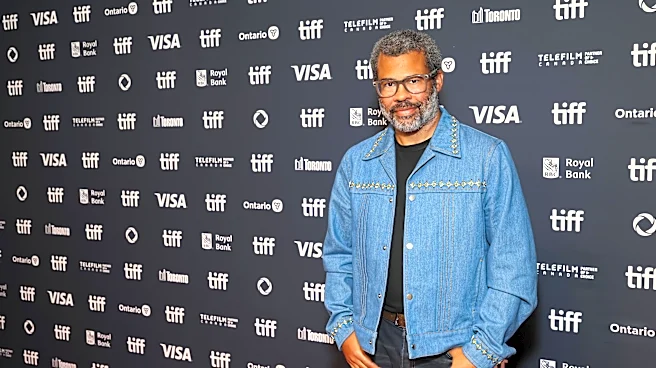
Jordan Peele's 2022 film 'Nope' has been included in a special issue dedicated to found footage horror. This issue aims to expand the canon of found footage horror, featuring a diverse range of titles from various media. Alongside 'Nope,' the collection
includes works such as H. P. Lovecraft’s 'The Call of Cthulhu' (1928), Shelley Jackson’s novel 'Riddance' (2018), Abel Gance’s World War I film 'J’accuse' (1919), and the French TV program 'Les Documents Interdits' (1989-1991, 2010). The issue also covers contemporary examples like 'The WNUF Halloween Special' (2013), 'The Curse of Professor Zardonicus' (2022), and the tabletop role-playing game 'The Devil in New Jersey' (2022). Additionally, it features new readings of popular found footage films like 'The Blair Witch Project' (1999) and 'Host' (2020).
Why It's Important?
The inclusion of Jordan Peele's 'Nope' in a discussion about found footage horror is significant because it broadens the definition and scope of the subgenre. While 'Nope' does not strictly adhere to traditional found footage conventions, its thematic elements and visual style often evoke a sense of discovered or observed media, prompting academic and critical re-evaluation of what constitutes 'found footage.' This expansion challenges conventional genre boundaries and encourages a more nuanced understanding of cinematic techniques that create verisimilitude and audience immersion. For filmmakers, it suggests that innovative approaches to storytelling can push genre limits, inspiring new forms of horror. For audiences and critics, it opens up new avenues for analysis and appreciation of films that blend different stylistic elements, contributing to a richer discourse within horror cinema.
What's Next?
The ongoing academic and critical discussion surrounding films like 'Nope' within the found footage horror genre suggests a continued evolution of genre definitions. Future analyses may further explore how contemporary filmmakers integrate elements of found footage without fully committing to the format, creating hybrid genres that offer fresh perspectives. This trend could lead to more experimental horror films that play with audience perception and narrative authenticity. For Jordan Peele, this recognition reinforces his status as a filmmaker who challenges conventions and sparks intellectual debate, potentially influencing his future projects to continue exploring innovative narrative structures and visual styles. The expansion of the found footage canon will likely encourage more diverse scholarly work and critical essays on horror cinema.
Beyond the Headlines
The debate over whether 'Nope' fits into the found footage genre highlights a broader trend in contemporary cinema: the blurring of genre lines and the deconstruction of traditional narrative forms. Filmmakers are increasingly experimenting with stylistic elements from various genres to create unique cinematic experiences. This intellectual engagement with film classification reflects how audiences and critics grapple with evolving storytelling techniques and the impact of digital media on visual narratives. The concept of 'found footage' itself, originally tied to the idea of discovered media, is being reinterpreted in an era where digital content is ubiquitous and often curated. This re-evaluation encourages a deeper look into how films manipulate perspective and authenticity to create specific emotional and intellectual responses, pushing the boundaries of what horror can achieve.