





What's Happening?
Urban Outfitters, Inc. (NASDAQ:URBN), a lifestyle retail company known for apparel and accessories targeting teens and young adults, has shown significant positive performance in recent years. The company has actively pursued an offensive growth strategy,
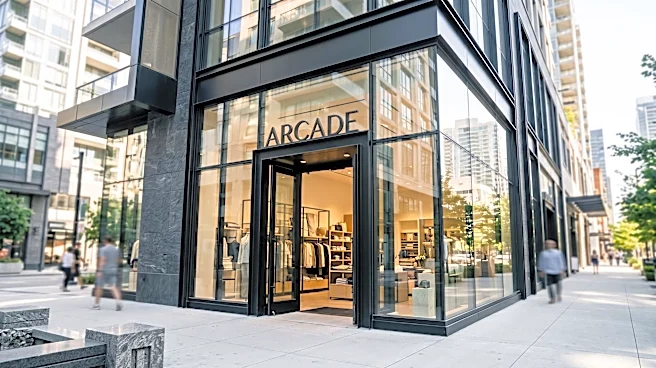
increasing its store count to 801 locations in the latest quarter. This represents an average annual growth rate of 5.2% over the past two years, which is considerably faster than the broader consumer retail sector. This expansion indicates that Urban Outfitters is investing in growth due to demand exceeding supply, particularly in areas where consumers may not have easy access to a store. Furthermore, the retailer has experienced surging same-store sales, a key industry metric reflecting revenue growth at existing locations. Over the last two years, Urban Outfitters has achieved an exceptional average year-on-year same-store sales growth of 5.3%, driven by increased customer visits and higher average spending per customer. This strong performance has led to the company's stock outperforming the S&P 500, with a 194% return since October 2021.
Why It's Important?
Urban Outfitters' robust growth in store count and same-store sales signals a healthy demand for its products and a successful retail strategy in a competitive market. The rapid expansion of physical stores suggests confidence in brick-and-mortar retail, contrasting with broader industry trends that often emphasize digital-only growth. This strategy allows the company to reach new customer bases and solidify its market presence, potentially leading to increased market share. The strong same-store sales growth indicates that existing locations are performing well, attracting more customers, and encouraging higher spending, which is a positive indicator of brand strength and customer loyalty. For investors, the company's stock performance, which has nearly tripled the S&P 500's gains, highlights its potential as a strong investment. However, the long-term revenue growth of 9.4% annualized over the last three years, while positive, is considered mediocre compared to the broader consumer retail sector, suggesting that while recent performance is strong, sustained long-term growth remains a point of consideration for stakeholders.
What's Next?
Given its current trajectory, Urban Outfitters is likely to continue its strategy of store expansion in underserved markets, aiming to further increase its physical footprint and customer accessibility. The company will also likely focus on maintaining the momentum in same-store sales by continuing to offer on-trend fashion and engaging customer experiences to drive traffic and average spending. As the company's stock trades at 13.3x forward P/E, investors will be closely watching for sustained growth in both revenue and profitability to justify its valuation. The company's ability to convert its rapid store growth and strong same-store sales into consistent long-term revenue growth will be crucial. Future reports will likely detail further expansion plans, digital integration strategies, and efforts to enhance customer engagement to ensure continued market outperformance. The retail sector will observe whether Urban Outfitters can maintain its current growth pace amidst evolving consumer preferences and economic conditions.
Beyond the Headlines
Urban Outfitters' success in expanding its physical retail presence in an era dominated by e-commerce highlights a nuanced understanding of its target demographic. While many retailers are scaling back physical stores, Urban Outfitters' strategy suggests that for certain consumer segments, particularly teens and young adults seeking on-trend fashion, the in-store experience remains vital. This approach could indicate a broader trend where physical stores serve as experiential hubs that complement online shopping, rather than being solely transactional points. The company's ability to consistently deliver on-trend products and create a desirable brand image is central to its performance. This also raises questions about the future of retail, suggesting a hybrid model where strategic physical expansion, coupled with strong digital engagement, can lead to significant growth. The focus on 'on-trend fashion' also implies a continuous need for agility in product development and marketing to stay relevant in a fast-paced consumer market.