





What's Happening?
Brazil is embarking on a strategic initiative to expand and develop its rare-earth mining sector, aiming to become a significant player in the global market. The Center for Strategic Studies and Management (CGEE) has outlined a roadmap for 2026-2040,
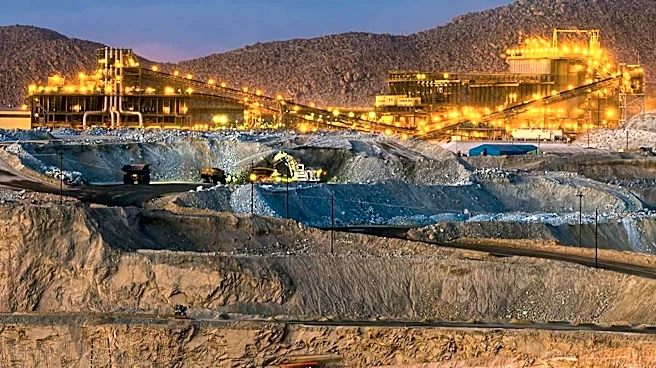
focusing on producing rare-earth metals, establishing a national research network, and forging international agreements with countries like the United States, Japan, the European Union, and Australia. This plan seeks to leverage Brazil's position as the holder of the world's second-largest mapped rare-earth reserves. Projects like Project Carina, led by Canadian mining company Aclara Resources in Nova Roma, Goiás, exemplify this push, with significant investment planned for industrial processing plants. The initiative also emphasizes decentralization, aiming to create professional training and high-value-added jobs in regions previously excluded from technological development, aligning with ESG principles.
Why It's Important?
The expansion of Brazil's rare-earth sector holds significant implications for global supply chains, particularly for the United States and its allies. Currently, China dominates the rare-earth market, posing potential vulnerabilities for Western tech and defense industries that rely on these critical minerals for products like drones, data-center equipment, and AI chips. A diversified supply from Brazil could reduce this dependency, enhancing supply chain resilience and national security for the U.S. and its partners. The planned agreements with the United States, Japan, the European Union, and Australia underscore a collective effort to secure alternative sources. Furthermore, the focus on developing a local workforce and technology ecosystem in Brazil could foster innovation and economic growth, creating new opportunities for international collaboration and investment in the critical minerals sector.
What's Next?
The immediate next steps involve the materialization of investment capital and the implementation of the strategic roadmap outlined by CGEE. While plans are on paper, the challenge lies in securing funding for existing projects and developing new ones. There will be a strong emphasis on establishing a national research network and fostering partnerships between private companies and public institutions, such as universities, to advance technological capabilities. Addressing the shortage of skilled professionals in strategic minerals will be crucial, potentially involving the temporary use of international workers and imported processes until local training programs gain momentum. The success of projects like Aclara Resources' Project Carina, which includes significant investment in processing plants and collaborations with universities for AI and environmental studies, will serve as key indicators of progress.
Beyond the Headlines
Beyond the immediate economic and strategic benefits, Brazil's rare-earth initiative touches upon deeper ethical and environmental considerations. The emphasis on ESG principles and the decentralization of development aims to ensure that the expansion of mining benefits local communities and adheres to sustainable practices. Collaborations with universities to study methods of using mining waste to restore areas of the Brazilian Savanna (Cerrado) highlight a commitment to mitigating environmental impact. However, the rapid expansion of mining activities always carries risks, including potential ecological disruption and social challenges. The long-term success will depend on a delicate balance between economic development, environmental stewardship, and social equity, ensuring that the 'rare-earth boom' genuinely contributes to sustainable growth and technological advancement without compromising local ecosystems or communities.