



What's Happening?
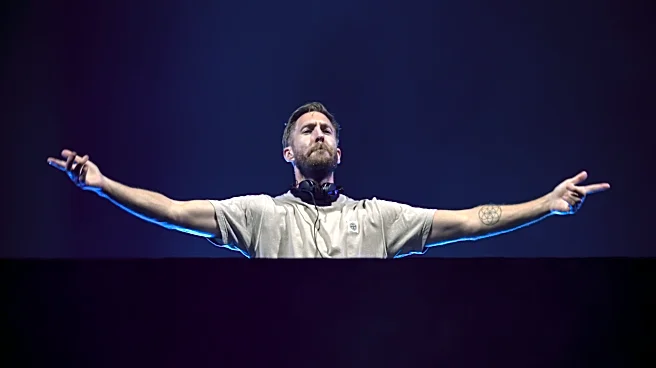
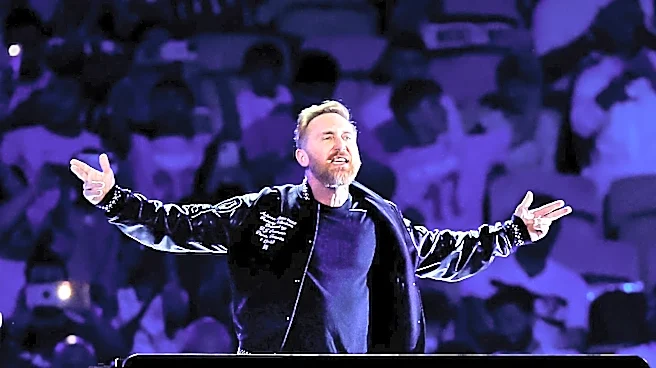
Scottish DJ and producer Calvin Harris has achieved a Guinness World Record for the largest attendance at a solo DJ set. This historic event took place in São Paulo, Brazil, where Harris performed for an estimated 1.6 million people. He delivered his set from
atop a giant carnival float, transforming the city's avenues into an expansive open-air dance floor. This performance marked Harris's return to Brazil after a decade-long absence, during which he played some of his most popular tracks, including "One Kiss" and "Summer." The event highlights a significant moment in electronic music, showcasing the genre's global reach and ability to draw massive crowds. Concurrently, the music world is also abuzz with initial revelations about the soundtrack for the upcoming video game GTA VI, which is set to feature contributions from artists such as Fred again.., Étienne de Crécy, and Guy-Manuel de Homem-Christo.
Why It's Important?
This record-breaking performance by Calvin Harris underscores the immense global appeal and cultural impact of electronic dance music (EDM). For the music industry, it demonstrates the potential for live events to attract colossal audiences, particularly in international markets like Brazil. This scale of attendance can translate into significant revenue streams through tourism, local commerce, and increased artist visibility, potentially influencing future tour planning and marketing strategies for other major artists. The event also reinforces the power of music to unite large populations in a shared cultural experience, transcending geographical and linguistic barriers. Furthermore, the mention of the GTA VI soundtrack, featuring prominent electronic artists, illustrates the growing synergy between the music and gaming industries, creating new platforms for artists to reach diverse audiences and generate additional revenue through licensing and collaborations. This convergence suggests a future where digital entertainment platforms play an increasingly vital role in music consumption and artist promotion.
What's Next?
Following this record-setting achievement, Calvin Harris's profile is likely to see a significant boost, potentially leading to increased demand for his performances and new collaborations. The success of such a large-scale event could inspire other artists and promoters to explore similar massive open-air concerts, particularly in regions with large, enthusiastic fan bases. For the electronic music genre, this event solidifies its position as a mainstream global phenomenon, potentially encouraging further investment in festivals and large-scale productions. The ongoing revelations about the GTA VI soundtrack will continue to generate excitement within both the gaming and music communities, with fans eagerly anticipating the full tracklist and its impact on the game's immersive experience. This cross-industry collaboration could set a precedent for how major entertainment franchises integrate music, offering new avenues for artists to showcase their work and reach broader audiences.
Beyond the Headlines
The sheer scale of Calvin Harris's performance in São Paulo raises interesting questions about the logistical and cultural implications of organizing events for 1.6 million people. Such gatherings require extensive planning for public safety, crowd control, and infrastructure, highlighting the complex interplay between entertainment, urban planning, and local governance. Culturally, the event demonstrates the universal appeal of music as a unifying force, capable of bringing together diverse groups of people in a collective celebration. It also reflects the evolving nature of live entertainment, where traditional concert venues are sometimes replaced by expansive public spaces to accommodate unprecedented numbers. The integration of electronic music into major video game franchises like GTA VI further blurs the lines between different forms of media, suggesting a future where music is not just consumed passively but is an integral, interactive component of broader digital experiences. This trend could lead to new forms of artistic expression and audience engagement, pushing the boundaries of how music is created, distributed, and experienced.