




What's Happening?
A coalition of major automakers, represented by the Alliance for Automotive Innovation, has formally requested that the U.S. Congress pass legislation to permanently ban Chinese vehicles from the American market. The group, which includes General Motors,
Ford, Toyota, Volkswagen, Hyundai, Honda, and Stellantis, is pushing for this action before the end of the year. According to CEO John Bozzella, Chinese automakers are currently 'dumping subsidized vehicles with connected software and hardware around the world,' posing a significant threat to the U.S. automotive industry and national security. While this has not yet occurred within the U.S., the Alliance emphasizes the urgency of preemptive measures. The Senate Commerce Committee had previously approved legislation in July to strengthen a government ban on Chinese automakers, but it still requires further passage to become law. The Chinese embassy in Washington has expressed opposition to these efforts, stating that Beijing has removed market access restrictions for foreign investment in manufacturing and remains open to international car makers.
Why It's Important?
This push by major automakers highlights a growing concern within the U.S. industry regarding economic competition and national security implications posed by Chinese vehicle manufacturers. The potential influx of subsidized Chinese electric vehicles (EVs) could significantly disrupt the U.S. automotive market, impacting domestic production, employment, and technological development. The argument that Chinese vehicles, with their connected software and hardware, could collect sensitive data on American owners raises significant national security and privacy concerns. This situation could lead to a trade dispute, potentially escalating tensions between the U.S. and China. For U.S. consumers, a ban could limit choices and potentially impact vehicle pricing, while for U.S. automakers, it could provide a shield against what they perceive as unfair competition. The debate also touches on the broader strategy of China to dominate global automotive manufacturing, prompting a strong response from American government and industry stakeholders.
What's Next?
The immediate next step involves Congress considering the proposed legislation to ban Chinese vehicles. The Alliance for Automotive Innovation is urging quick action before the end of the year, indicating a desire to make this policy a permanent law. The Senate Commerce Committee's prior approval of similar legislation suggests some congressional support, but it still faces hurdles to final passage. Lawmakers like Republican Senator Bernie Moreno and Senator Elissa Slotkin have proposed legislation to codify the Biden administration's regulation effectively banning Chinese automakers from selling or building passenger vehicles in the U.S. However, concerns have been raised, such as Senator Ted Cruz's point that a provision banning companies with over 15% Chinese ownership could inadvertently affect companies like Mercedes-Benz. The Chinese embassy's opposition indicates potential diplomatic and trade repercussions if the ban is enacted. The outcome will depend on legislative consensus and the balancing of economic, national security, and international trade considerations.
Beyond the Headlines
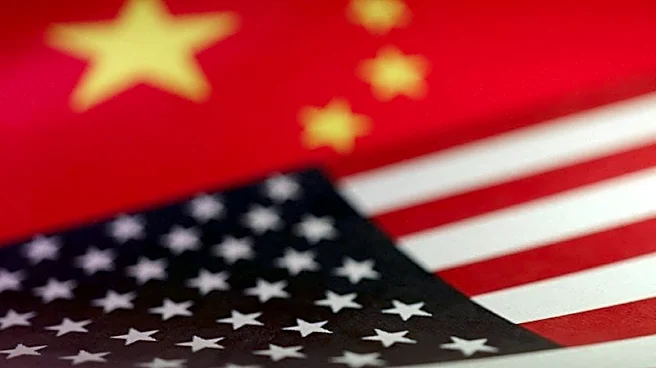
Beyond the immediate economic and national security concerns, this issue delves into the broader geopolitical competition between the U.S. and China. The automotive industry, particularly the burgeoning EV sector, is a critical battleground for technological dominance and economic influence. The debate over Chinese vehicles in the U.S. market reflects a deeper struggle over supply chain control, intellectual property, and data sovereignty. The 'connected software and hardware' aspect of modern vehicles introduces new dimensions to national security, transforming cars from mere transportation devices into potential data collection platforms. This situation could accelerate the decoupling of technological ecosystems between the two nations, forcing companies to choose sides or develop separate product lines for different markets. The long-term implications could include a more fragmented global automotive market and increased pressure on international companies to align with either U.S. or Chinese standards and regulations, impacting global trade and technological innovation.