



What's Happening?
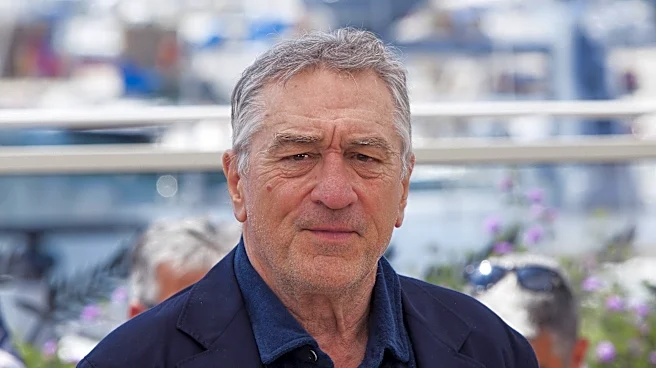
Robert De Niro famously turned down the lead role of Captain Benjamin L. Willard in Francis Ford Coppola's epic Vietnam War film, 'Apocalypse Now,' which ultimately went to Martin Sheen. De Niro explained his decision, stating that he was already committed
to working with Martin Scorsese on 'Taxi Driver' at the time. This decision occurred after De Niro had already received his first Oscar nomination for 'The Godfather Part II.' Interestingly, Francis Ford Coppola also initially sought Al Pacino for the role in 'Apocalypse Now,' but Pacino also declined for undisclosed reasons. Both actors' decisions were made prior to the film's notoriously long and challenging four-year production period.
Why It's Important?
This decision by Robert De Niro highlights a pivotal moment in his career and the landscape of 1970s American cinema. Choosing 'Taxi Driver' over 'Apocalypse Now' allowed De Niro to solidify his collaboration with Martin Scorsese, a partnership that would define a significant portion of his iconic filmography. This choice also underscores the artistic freedom and difficult decisions actors faced during a highly creative period in Hollywood. For the film industry, it illustrates how casting choices can profoundly alter the trajectory of major productions and the careers of those involved. The fact that both De Niro and Al Pacino declined 'Apocalypse Now' also speaks to the film's challenging nature, which became legendary for its arduous production.
What's Next?
While this event is historical, its implications continue to resonate in film studies and discussions about actor-director collaborations. The 'what if' scenario of De Niro in 'Apocalypse Now' remains a point of speculation among film enthusiasts. The enduring success and critical acclaim of both 'Taxi Driver' and 'Apocalypse Now' demonstrate that despite the casting changes, both films achieved iconic status. This anecdote serves as a reminder of the complex decision-making processes in filmmaking and how individual choices can shape cinematic history. It also reinforces the strong artistic bond between Robert De Niro and Martin Scorsese, which continued for decades.
Beyond the Headlines
The story of Robert De Niro declining 'Apocalypse Now' for 'Taxi Driver' delves into the deeper themes of artistic loyalty and the pursuit of specific creative visions. It illustrates how an actor's commitment to a particular director or project can sometimes outweigh the allure of another major role, even in a film by a director with whom they've previously achieved success. This decision also reflects the intense creative energy of the New Hollywood era, where directors like Coppola and Scorsese were pushing boundaries, and actors were often drawn to projects that offered profound artistic challenges. It highlights the personal and professional calculations that go into shaping a career in an industry driven by both art and commerce, and how these choices can define an actor's legacy.