










What's Happening?
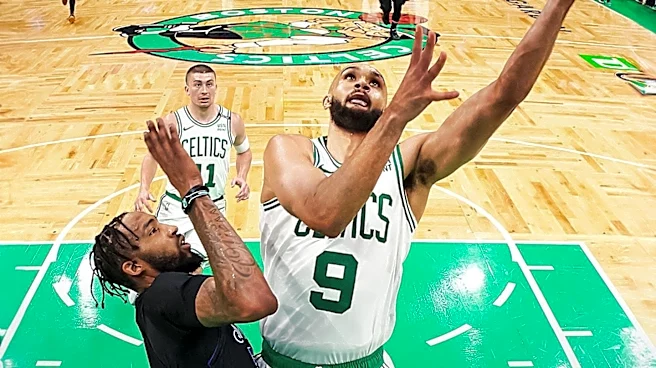
Mitchell Robinson, a key player for the New York Knicks, has signed a three-year, $47.4 million contract with the Boston Celtics after leaving the Knicks as a free agent. This move follows Knicks governor James Dolan's firm stance against paying into
the second apron of the salary cap, which effectively ensured Robinson's departure due to the team's existing high-value contracts. Robinson's exit marks the end of his eight-season tenure with the Knicks, during which he made significant contributions, including a crucial offensive rebound in the NBA Finals against the San Antonio Spurs, helping the Knicks secure their first championship since the 1972-73 season.
Why It's Important?
The departure of Mitchell Robinson from the Knicks to the Celtics highlights the impact of salary cap restrictions on team dynamics and player movements within the NBA. Dolan's decision not to exceed the salary cap's second apron reflects a strategic financial approach that prioritizes long-term fiscal health over immediate player retention. This decision could influence other teams facing similar financial constraints, potentially leading to shifts in player rosters and affecting competitive balance within the league. Robinson's move to the Celtics strengthens their lineup, potentially altering the dynamics of the Eastern Conference and impacting playoff prospects.
What's Next?
With Robinson now part of the Celtics, the team is expected to integrate him into their strategy, leveraging his skills to enhance their performance in the upcoming season. The Knicks, on the other hand, may need to reassess their roster and financial strategies to maintain competitiveness without Robinson. This situation could prompt other NBA teams to evaluate their salary cap strategies, especially those with high-value contracts, to avoid losing key players. The broader implications for the league include potential changes in player negotiations and contract structuring as teams navigate financial constraints.
Beyond the Headlines
Robinson's departure underscores the complex interplay between financial management and team success in professional sports. The decision by Dolan not to exceed the salary cap's second apron reflects broader economic considerations that teams must balance against competitive aspirations. This scenario may lead to discussions about the effectiveness and fairness of salary cap structures in maintaining competitive balance across the league. Additionally, Robinson's move could influence player perceptions of team loyalty and financial priorities, potentially affecting future free agency decisions.