





What's Happening?
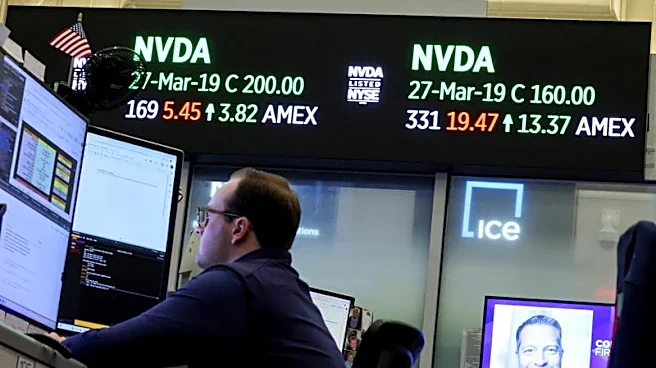
Nvidia (NVDA) shares experienced a significant tumble, remaining down 35% from their October 6 peak, following the return of Chief Executive Officer Jensen Huang. While Huang's reinstatement addressed leadership concerns, it did not alleviate broader
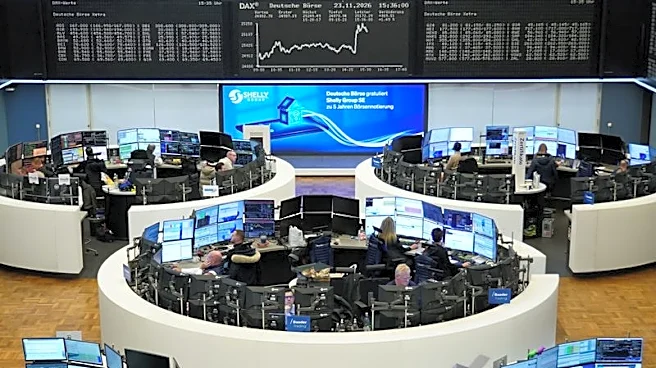
investor skepticism regarding continued spending on artificial intelligence (AI) and the returns on those investments. Concurrently, CoreWeave (CRWV) shares also slid, reflecting concerns over AI-related debt. This downturn for both companies is occurring as the Nasdaq 100 Index is poised to enter its first bear market in over a year. This market shift is largely attributed to investors divesting from stocks exposed to the artificial intelligence industry, driven by rapidly deteriorating sentiment. The overall market environment suggests a re-evaluation of the AI sector's growth trajectory and financial viability.
Why It's Important?
The decline in Nvidia and CoreWeave shares, coupled with the Nasdaq 100's potential entry into a bear market, signals a significant shift in investor confidence towards the artificial intelligence industry. Nvidia, a key supplier of AI chips, and CoreWeave, an AI cloud platform, are bellwethers for the sector. Their performance directly reflects the market's perception of AI's immediate profitability and growth prospects. The skepticism surrounding customer spending on AI and the returns on those investments indicates a maturing phase for the technology, where initial hype is being replaced by a demand for tangible financial results. This market correction could lead to a more disciplined approach to AI investments, potentially favoring companies with clear revenue models and sustainable growth. For the broader U.S. economy, a slowdown in AI investment could impact innovation, job creation in the tech sector, and the competitive landscape, as AI is increasingly seen as a critical driver of future economic growth. Companies heavily reliant on AI for their products and services may face increased scrutiny and pressure to demonstrate value.
What's Next?
The immediate future for Nvidia and CoreWeave, as well as the broader AI industry, will likely involve a period of market re-adjustment. Companies will need to address investor concerns by demonstrating clear pathways to profitability and sustainable growth in their AI ventures. This could lead to a focus on more practical, revenue-generating AI applications rather than speculative projects. Investors will be closely watching upcoming earnings reports and company guidance for signs of stabilization or further contraction in AI spending. The potential bear market in the Nasdaq 100 suggests that a broader economic slowdown or a re-evaluation of high-growth tech stocks is underway, which could impact access to capital for AI startups and expansion plans for established players. Companies like Nvidia may need to diversify their revenue streams or find new markets to offset any decline in AI-specific demand. CoreWeave will likely face pressure to manage its AI-related debt and prove the long-term viability of its cloud platform amidst increased market scrutiny.
Beyond the Headlines
The current market sentiment reflects a deeper re-evaluation of the 'artificial intelligence spending boom' and its long-term sustainability. Beyond immediate stock fluctuations, this period could mark a transition from an era of speculative investment in AI to one demanding concrete returns and ethical considerations. The skepticism about 'whether customers will keep spending on artificial intelligence amid rising skepticism about returns on those investments' points to a critical juncture where the practical application and measurable impact of AI technologies will become paramount. This could lead to a more discerning market, where AI solutions that offer clear, demonstrable value will thrive, while those built on hype may struggle. Furthermore, the broader economic context, including rising yields and access to credit, suggests that the cost of capital for AI development and deployment is increasing, potentially slowing down the pace of innovation in certain areas. This shift could also prompt a re-examination of the societal implications of widespread AI adoption, moving beyond technological capabilities to focus on responsible development and deployment.