


What's Happening?
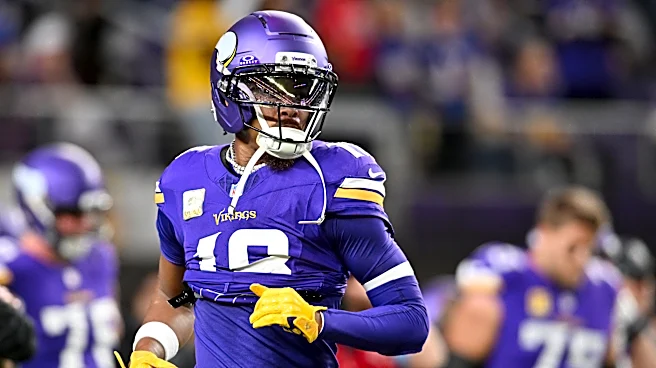
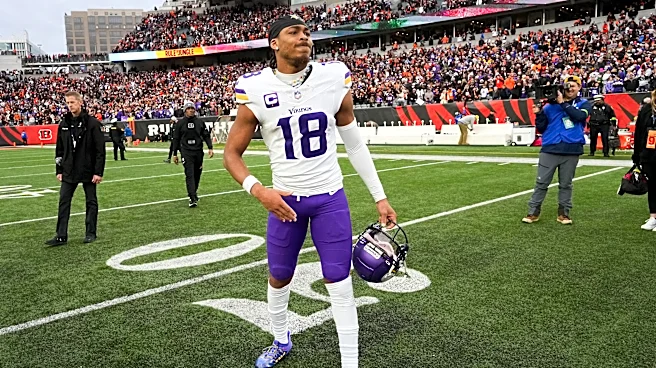
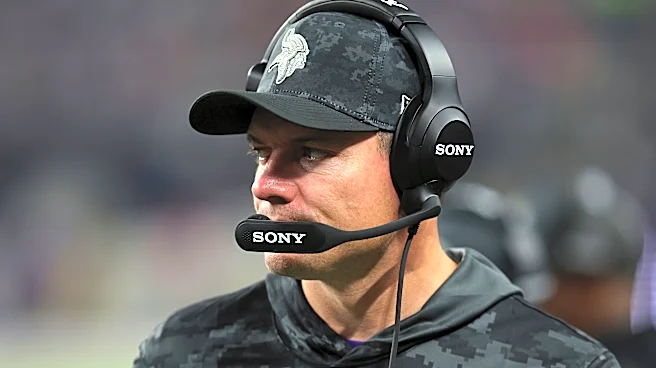
Sports analyst Stephen A. Smith has publicly criticized Minnesota Vikings Head Coach Kevin O'Connell for his management of wide receiver Justin Jefferson's career. Smith, speaking on ESPN's 'First Take,' argued that O'Connell has 'gotten away with a crime'
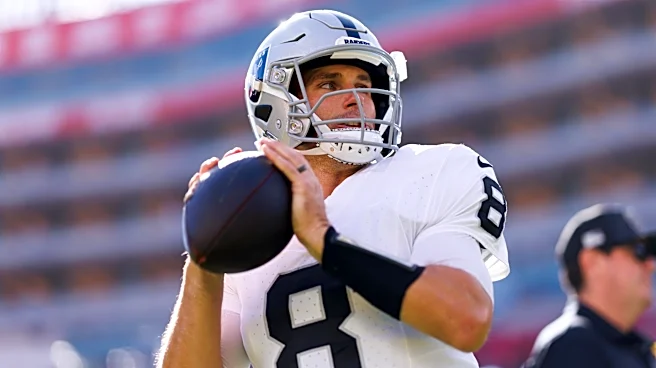
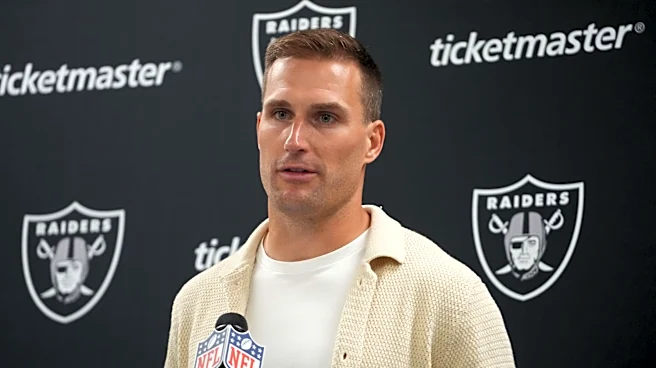
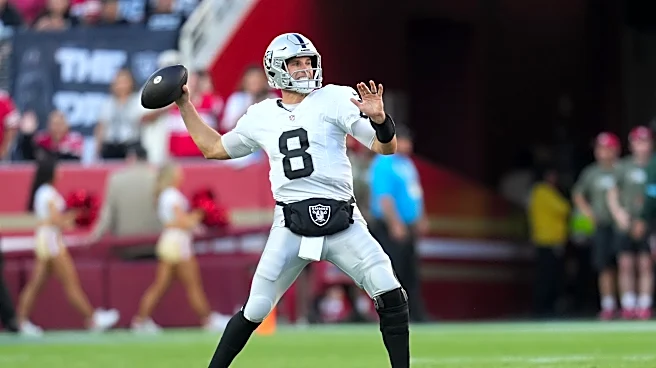
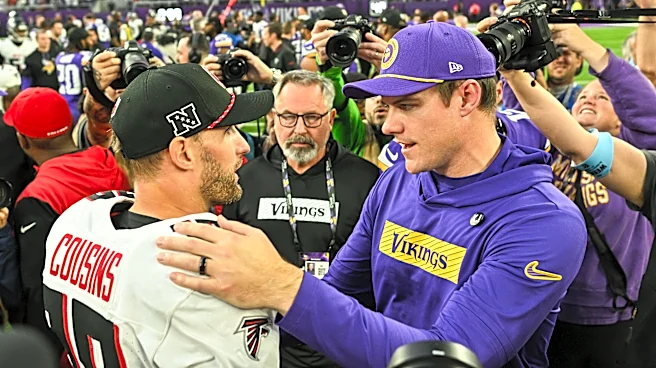
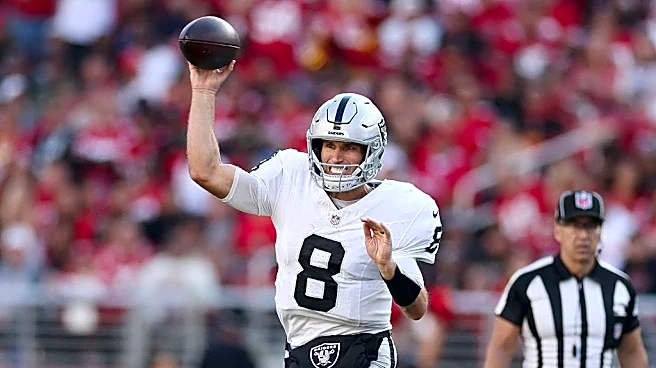
by failing to provide Jefferson with consistent quarterback play, thereby hindering his production. Smith highlighted Jefferson's declining statistics since 2022, when he had 128 receptions for 1,809 yards and eight touchdowns with Kirk Cousins as quarterback. In contrast, Jefferson finished the 2025 season with 84 catches for 1,048 yards and two touchdowns, and through seven games in 2026, he has recorded 31 receptions for 393 yards and four touchdowns. Smith pointed to the Vikings' decision to let Cousins leave in 2024, leading to a rotation of quarterbacks including Sam Darnold, J.J. McCarthy, Carson Wentz, Max Brosmer, and Kyler Murray. The recent trade to bring Cousins back to Minnesota from the Raiders for a 2027 third-round pick was supported by Smith, who believes it could help Jefferson regain his previous form.
Why It's Important?
This criticism from a prominent sports analyst like Stephen A. Smith underscores significant concerns within the NFL community regarding player development and team strategy. For the Minnesota Vikings, the narrative of mismanaging a star player like Justin Jefferson could impact fan perception, player morale, and future recruitment efforts. Jefferson is considered one of the league's elite receivers, with Smith comparing his potential to legends like Jerry Rice, Randy Moss, and Terrell Owens. The inability to maximize such talent reflects poorly on the coaching staff and front office. The return of Kirk Cousins is a direct acknowledgment of the quarterback instability, suggesting the team is attempting to rectify past decisions. The success or failure of this reunion will be closely watched, as it could determine the Vikings' competitiveness and Jefferson's long-term future with the team, potentially influencing his contract negotiations and trade value.
What's Next?
The immediate next step for the Minnesota Vikings will be to integrate Kirk Cousins back into the offense and re-establish a strong connection with Justin Jefferson. The team will be under pressure to demonstrate improved offensive performance and Jefferson's statistical resurgence. If Cousins can provide the stability and production he did in his previous tenure, it could validate the trade and alleviate some of the criticism directed at Coach O'Connell. Conversely, if Jefferson's production does not significantly improve, the scrutiny on O'Connell and the Vikings' quarterback strategy will intensify. This situation could also influence Jefferson's future contract negotiations; if he continues to be underutilized, he might seek a trade or a new contract with a team that can better leverage his skills. The team's performance in the remainder of the 2026 season will be crucial in determining the long-term implications for both O'Connell and Jefferson.
Beyond the Headlines
The situation with Justin Jefferson and the Minnesota Vikings highlights a broader issue in professional sports: the delicate balance between coaching philosophy, roster management, and maximizing individual player talent. When a player of Jefferson's caliber experiences a significant drop in production, it often sparks debates about accountability within the organization. This scenario also touches upon the financial implications of player contracts and team investments. Jefferson's potential to be among the all-time greats means that any perceived mismanagement of his career represents a substantial opportunity cost for the Vikings. The narrative also reflects the power of media commentary in shaping public opinion and putting pressure on sports franchises. The outcome of this situation could serve as a case study for other NFL teams on the importance of quarterback stability and strategic player development, especially when dealing with generational talents.