







What's Happening?
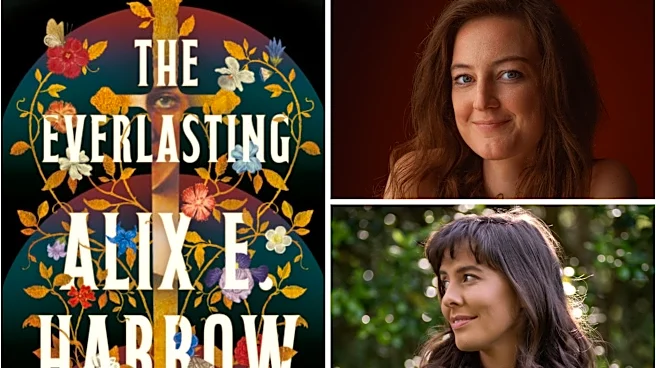
Netflix is developing a series adaptation of the fantasy novel 'The Everlasting' by Alix E. Harrow. The streaming giant secured the rights to the bestseller in a competitive bidding process. Daphne Ferraro, known for her work on Amazon's 'Maxton Hall,'
will write and executive produce the series alongside Harrow and other producers. 'The Everlasting' is a time-loop fantasy that follows Sir Una Everlasting, a legendary female knight, and a historian who travels back in time. The story explores themes of heroism and historical revisionism, as the characters attempt to rewrite history. The project is part of Netflix's strategy to expand its slate of book adaptations.
Why It's Important?
This adaptation underscores Netflix's commitment to diversifying its content offerings by tapping into popular literary works. By developing 'The Everlasting,' Netflix aims to attract fans of the novel and fantasy genre enthusiasts, potentially boosting its subscriber base. The series could also contribute to the ongoing trend of adapting books into television series, which allows for more in-depth storytelling compared to film adaptations. This move highlights the competitive nature of the streaming industry, where platforms vie for exclusive content to differentiate themselves and retain viewers.
What's Next?
If 'The Everlasting' is ordered to series, it will join Netflix's lineup of successful book adaptations, such as 'The Queen's Gambit' and 'Bridgerton.' The development process will involve casting, production, and marketing strategies to ensure the series resonates with audiences. As Netflix continues to invest in diverse content, other streaming services may follow suit, leading to increased competition for rights to popular novels. The success of this adaptation could influence future decisions regarding the types of literary works that are considered for television.
Beyond the Headlines
The adaptation of 'The Everlasting' may spark discussions about the representation of female heroes in media and the importance of diverse storytelling. By focusing on a female knight, the series has the potential to challenge traditional gender roles and offer new perspectives on heroism. Additionally, the time-loop narrative could explore complex themes related to history and memory, encouraging viewers to reflect on how stories are told and remembered. This project may also inspire other creators to explore similar themes in their work, contributing to a broader cultural conversation.