




What's Happening?
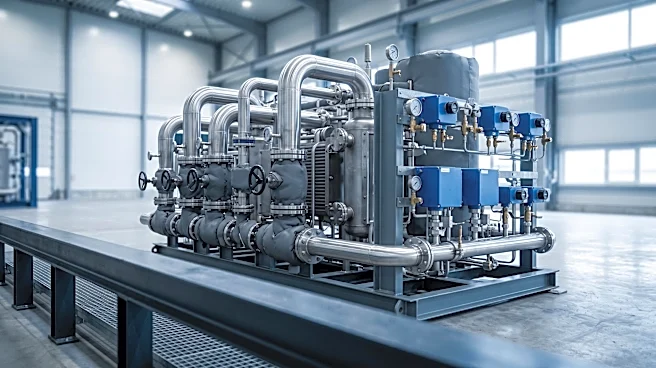
NewHydrogen, Inc. has announced the completion and commissioning of its ThermoLoop® Engineering Test Unit (ETU). This unit is designed to continuously cycle the ThermoLoop process, which uses water and heat to produce industrial-scale clean hydrogen.
The primary goal of the ETU is to generate crucial engineering data to inform the design of the company's first commercial pilot plant. According to Steve Hill, CEO of NewHydrogen, the ETU is foundational for future developments, allowing for continuous cycling to demonstrate long-duration stability and gather data for the pilot plant. Ryan Patrick, NewHydrogen’s Senior Chemical Engineer, emphasized that continuous operation is vital for understanding how the process behaves over time, and the collected data will define the specifications for the commercial pilot plant. This milestone follows the automation of the ETU's controls, enhancing testing precision and repeatability. The ThermoLoop technology aims to address the demand for massive amounts of clean hydrogen, which current production methods struggle to meet at gigawatt scales.
Why It's Important?
The successful commissioning of NewHydrogen's ThermoLoop ETU is a significant step towards scaling up clean hydrogen production, which is critical for decarbonizing hard-to-abate sectors in the U.S. and globally. Current electrolysis capacity worldwide is fragmented and insufficient to meet the growing demand for gigawatt-scale clean hydrogen. The ThermoLoop technology, designed to produce 200,000 tonnes of hydrogen per year, equivalent to a 1.5 to 2 gigawatt dedicated electrolysis plant, could bridge this gap. By offering a method that uses heat to split water instead of relying on fossil fuel feedstocks like natural gas, it directly supports environmental goals and reduces reliance on carbon-intensive processes. This development could lead to more affordable and scalable clean hydrogen, impacting industries such as manufacturing, transportation, and energy generation by providing a zero-emission fuel source. The ability to produce hydrogen at such a large scale could also enhance energy security by diversifying energy sources and reducing dependence on imported fossil fuels.
What's Next?
With the ETU now operational, NewHydrogen will focus on continuous cycling to demonstrate the long-duration stability of the ThermoLoop process and collect comprehensive engineering data. This data will be instrumental in designing and determining the specifications for the company's first commercial pilot plant. The pilot plant, once established, will serve as a crucial bridge between bench-scale experiments and full-scale industrial application. A successful pilot plant will provide the basis for the ultimate commercial deployment of industrial-scale ThermoLoop facilities, which are intended to meet the substantial demands of the clean hydrogen market. The company anticipates that the insights gained from the ETU will enable them to scale production to major industrial plants, thereby contributing significantly to the global clean energy transition and the widespread adoption of hydrogen as a sustainable fuel.
Beyond the Headlines
The advancement of technologies like ThermoLoop has broader implications beyond just hydrogen production. It highlights a shift in the energy sector towards innovative, heat-driven processes that could potentially be more energy-efficient and cost-effective than traditional electrolysis, especially if waste heat sources can be utilized. This approach could reduce the electricity demand associated with green hydrogen production, making it more economically viable and environmentally sustainable. Furthermore, the focus on industrial-scale production capacity (gigawatts) underscores the ambition to integrate clean hydrogen into existing industrial infrastructures, which currently rely heavily on fossil fuels. This transition could lead to a re-evaluation of industrial processes, supply chains, and energy policies, fostering a more circular economy where byproducts like heat are repurposed for clean energy generation. The success of such technologies could also spur further investment in research and development for other novel clean energy solutions.