




What's Happening?
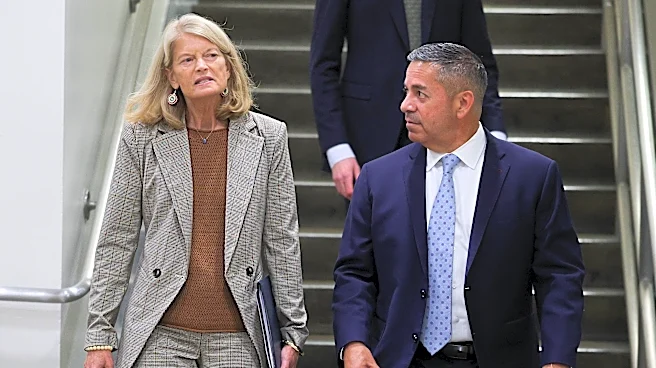
A bipartisan group of six U.S. senators has sent a letter to Treasury Secretary Scott Bessent, advocating for the extension of regulatory safeguards, or a 'safe harbor,' to state-regulated stablecoin businesses. The senators, led by Sen. Cynthia Lummis
(R-Wyo.) and including Sens. Kirsten Gillibrand (D-N.Y.), Angela Alsobrooks (D-Md.), Kevin Cramer (R-N.D.), Pete Ricketts (R-Neb.), and Mark Warner (D-Va.), expressed concern that the Treasury's current proposal for stablecoin regulations does not adequately cover state-licensed issuers. The Guiding and Establishing National Innovation for U.S. Stablecoins (GENIUS) Act, signed in July 2025, allows certain stablecoin issuers with up to $10 billion in outstanding tokens to operate under state jurisdiction, provided their state regulations meet federal requirements. However, the Treasury's proposed rules, published in August, only offer a 'safe harbor' to federal applicants, potentially incentivizing state-regulated entities to seek federal licenses.
Why It's Important?
This push by the senators is crucial for the future of stablecoin regulation and the broader cryptocurrency landscape in the U.S. Without a 'safe harbor,' state-regulated stablecoin issuers could face significant operational uncertainty while their state regulatory frameworks are being evaluated for compliance with the GENIUS Act. This disparity in treatment could undermine the intent of the GENIUS Act, which aimed to provide a dual regulatory path for stablecoin companies. If state-regulated entities are compelled to seek federal licenses due to a lack of protection, it could centralize stablecoin oversight and potentially stifle innovation at the state level. This issue impacts the competitive landscape for stablecoin issuers, potentially disadvantaging smaller, state-focused companies and influencing the overall structure of the digital asset market.
What's Next?
The senators are urging the Treasury Department to expand the proposed safeguards to include state-regulated issuers that comply with the GENIUS Act's provisions before January 18, 2028. They also seek protection for these entities while federal officials assess the adherence of state regulatory systems to the GENIUS Act's requirements. While the letter does not confirm any immediate changes to Treasury regulations, it places significant pressure on the department to address the discrepancy in treatment as it continues to develop stablecoin regulations. The Treasury's response will determine whether state-regulated stablecoin issuers receive the necessary legal shield to continue operations without being forced into federal licensing, thereby shaping the regulatory framework for digital assets in the U.S.
Beyond the Headlines
The debate over 'safe harbor' provisions for stablecoin issuers highlights a broader tension in U.S. financial regulation: the balance between federal and state oversight. The GENIUS Act's intent to allow both state and federal charters for stablecoins reflects a desire to foster innovation while ensuring consumer protection and financial stability. However, the current regulatory gap identified by the senators could inadvertently create a de facto federalization of stablecoin regulation, even if not explicitly intended. This situation also underscores the ongoing challenge of adapting existing regulatory frameworks to rapidly evolving financial technologies. The outcome of this advocacy could set a precedent for how other emerging financial technologies are regulated, influencing the interplay between state and federal authorities in the digital economy.