





What's Happening?
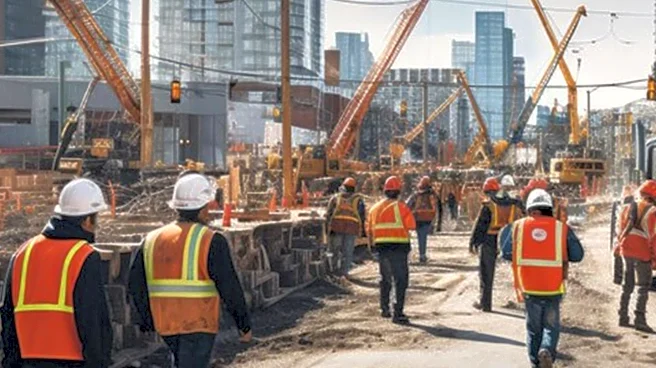
The construction industry is grappling with a significant shortage of skilled labor, making it increasingly difficult for companies to find and retain qualified workers. This challenge is impacting the ability to complete infrastructure projects and maintain
profit margins. One major employer reported a substantial increase in hiring for technical fiber work, highlighting the growing demand for specialized skills. The issue extends beyond just finding new talent; it also involves retaining experienced foremen and superintendents who are often burdened with administrative tasks after their physical workday ends. This 'second shift' of paperwork, which can include sorting photos, filling out daily reports, and drafting schedule updates, is leading to burnout and turnover among the most experienced personnel. The industry is advised to invest in vocational partnerships and upskilling initiatives to build robust talent pipelines and address this critical labor gap.
Why It's Important?
The scarcity of skilled labor in the construction industry has profound implications for the U.S. economy and infrastructure development. Delays in projects due to insufficient skilled workers can lead to increased costs, missed deadlines, and a slowdown in economic growth. The administrative burden on experienced field leaders not only reduces their capacity for high-value tasks like coaching apprentices and quality control but also contributes to a higher turnover rate, exacerbating the labor shortage. This situation directly impacts contractor margins, as companies either pay for these duplicated hours or face the costs associated with replacing skilled workers. Addressing this issue is crucial for maintaining the competitiveness of the U.S. construction sector and ensuring the timely completion of essential infrastructure projects, from roads and bridges to critical utility networks.
What's Next?
To combat the skilled labor shortage, the construction industry is encouraged to adopt strategies that streamline administrative tasks and invest in workforce development. Implementing real-time collaboration software can help foremen and superintendents document work as it happens, eliminating the need for a 'second shift' of paperwork and allowing them to focus on core responsibilities. This technological integration can also prevent costly rework by ensuring timely information flow between field and office teams. Furthermore, companies are advised to strengthen vocational partnerships and upskilling programs to attract and train new talent. Treating skilled labor with respect and offering competitive wages will be essential for retention. The long-term success of the industry will depend on its ability to adapt to these challenges by fostering a more efficient and supportive work environment for its skilled workforce.
Beyond the Headlines
The skilled labor crisis in construction reflects broader societal and educational trends, including a historical de-emphasis on vocational training in favor of four-year college degrees. This shift has created a deficit in essential trades, leading to the current challenges. The 'second shift' phenomenon highlights an ethical dimension: the exploitation of experienced workers' time through inefficient processes, which not only impacts their work-life balance but also devalues their expertise. The reliance on technology to mitigate administrative burdens points to a cultural shift within the industry, moving towards digital solutions to support human capital rather than replace it. This development could lead to a more attractive and sustainable career path in construction, potentially drawing in a new generation of workers who value efficiency and work-life balance, thereby addressing the long-term pipeline issues.