



What's Happening?
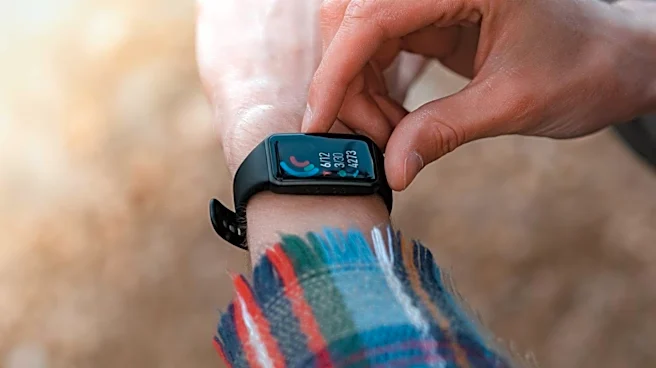
Fitness wearables are increasingly featuring detailed sleep tracking capabilities, providing users with breakdowns of REM, deep, and light sleep. These devices infer sleep stages primarily from movement (accelerometer) and heart rate/heart rate variability,
and sometimes incorporate blood oxygen and skin temperature data. While consumer wearables are generally accurate in measuring total sleep duration, sleep timing, and night-to-night trends, their precision in distinguishing between specific sleep stages like deep and light sleep, or detecting brief awakenings, is less reliable. Different devices and brands may report substantially varied sleep stage breakdowns due to proprietary models. The data provided by these wearables should be treated as estimates rather than precise measurements, and users are advised to focus on personal trends over time rather than absolute scores.
Why It's Important?
The widespread adoption of sleep tracking in fitness wearables has significant implications for public health and consumer behavior in the U.S. While these devices empower individuals to monitor their sleep patterns and identify potential issues, the varying accuracy of sleep stage detection can lead to misinterpretations. Over-reliance on potentially inaccurate data might cause unnecessary anxiety about sleep scores, a phenomenon known to worsen sleep quality. For the fitness and health technology industry, this highlights the ongoing challenge of balancing advanced features with scientific accuracy and clear communication to consumers. It also underscores the need for users to understand the limitations of consumer-grade devices and to consult healthcare professionals for persistent sleep concerns, as wearable data is not a diagnostic tool.
What's Next?
The future of sleep tracking in wearables will likely involve continued advancements in sensor technology and algorithms to improve accuracy, particularly in sleep stage differentiation. Manufacturers may focus on clearer disclaimers regarding the diagnostic limitations of their devices and emphasize trend analysis over precise daily metrics. There could also be a push for greater standardization or independent validation of sleep tracking algorithms across different brands to provide more consistent and reliable data for consumers. Users are encouraged to utilize these tools for identifying personal sleep trends and as a basis for discussions with qualified professionals, rather than as definitive medical assessments. The market may also see further integration of sleep data with broader health and wellness platforms, offering more holistic insights into overall well-being.
Beyond the Headlines
Beyond the immediate utility of sleep tracking, the proliferation of these devices raises deeper questions about data privacy and the potential for 'quantified self' culture to impact mental health. The collection of sensitive physiological data by commercial entities necessitates robust data security and transparent privacy policies. Ethically, the industry faces the challenge of promoting health awareness without fostering hypochondria or anxiety among users who might obsess over imperfect data. Culturally, the integration of sleep scores into daily routines could shift perceptions of rest from an intuitive biological process to a performance metric, potentially altering how individuals relate to their own bodies and well-being. The long-term societal impact will depend on how effectively technology companies, healthcare providers, and consumers navigate these complex interactions between data, health, and personal identity.