







What's Happening?
Kashmir is actively working to expand its agricultural exports beyond its traditional apple market by focusing on stone fruits such as cherries, peaches, and plums. Production of these fruits has significantly increased over the past two decades. Recent
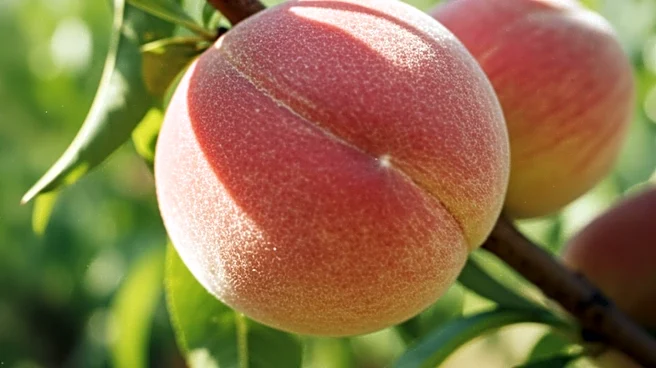
shipments of premium varieties to the UAE and Singapore in July 2026 highlight the region's potential to attract international buyers. However, for these consignments to become regular trade, improvements in consistent grading, handling, and cold-chain facilities are necessary. In 2024-25, Jammu and Kashmir produced 23,450 metric tonnes of cherries, 9,050 tonnes of peaches, and 18,960 tonnes of plums across major growing districts including Ganderbal, Srinagar, Shopian, Baramulla, Budgam, Anantnag, and Pulwama. The region cultivates both traditional and newer commercial varieties of these stone fruits.
Why It's Important?
This diversification strategy is crucial for Kashmir's agricultural sector, which has historically relied heavily on apples. By expanding into stone fruits, the region aims to create new export opportunities and reduce its dependence on a single crop, thereby enhancing economic stability for local farmers and businesses. The focus on improving post-harvest handling, including pre-cooling, refrigerated transport, and cold-storage infrastructure, addresses significant challenges that have led to substantial post-harvest losses—estimated at 40–49% for cherries and 27–35% for peaches and plums. Successful implementation of these improvements will not only boost export volumes but also ensure higher quality produce reaches international markets, potentially increasing revenue and creating more jobs in the agricultural supply chain. This initiative could also attract further investment in the region's agricultural infrastructure.
What's Next?
The next steps involve transforming occasional international shipments into a dependable export program. This requires continued investment in cold-chain logistics and stronger links with organized retail, quick-commerce platforms, supermarkets, and international buyers. Efforts are also underway to address fragmented supply by encouraging organized sourcing and collection from individual growers, who often cannot meet the consistent quantities required by international markets. Furthermore, there is a push to explore value addition by processing lower-grade fruits into products like juices, concentrates, jams, and dried fruits. This approach aims to reduce waste and generate additional income for the region. The success of these initiatives will depend on sustained collaboration between growers, private companies like Mont Valley Agritech Private Limited, and government bodies.
Beyond the Headlines
The shift towards diversifying agricultural exports in Kashmir carries broader implications for regional development and economic resilience. By moving beyond apples, Kashmir is not only seeking to tap into new markets but also to mitigate risks associated with climate change and market fluctuations that can disproportionately affect monoculture economies. The emphasis on quality control, from sweetness and firmness to aroma and texture, challenges the misconception that fruit quality is solely dependent on size and external appearance. This focus on intrinsic quality could help establish a premium brand for Kashmiri stone fruits globally. Moreover, the development of robust post-harvest infrastructure and value-added processing facilities could foster a more sophisticated and sustainable agricultural economy, providing long-term benefits to the local population and potentially serving as a model for other regions facing similar economic and agricultural challenges.