





What's Happening?
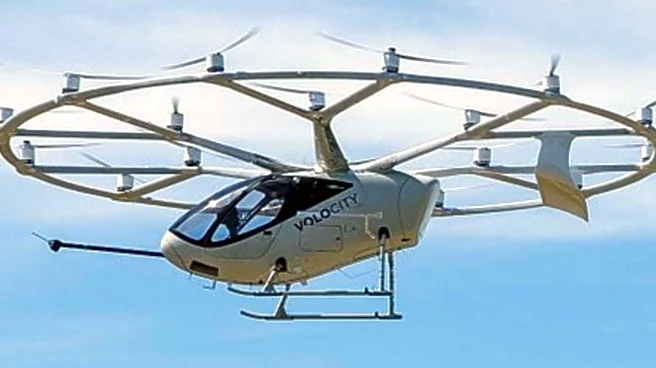
Joby Aviation, a California-based aerospace company developing all-electric vertical takeoff and landing (eVTOL) aircraft, is experiencing a significant decline in its share price. The shares closed at $3.90 on Wednesday, November 25, marking a 76% drop
from their highest close in the past year. This downturn is primarily attributed to investor concerns regarding the timeline for Federal Aviation Administration (FAA) type certification, which is essential for the company to operate its air-taxi business commercially. Management anticipates beginning the 'final journey' toward type certification in the first half of 2027, which involves FAA pilot training and the completion of Joby's own tests. Until then, the majority of Joby's revenue, which surged 144% year-over-year to $55.1 million in Q3 2026, comes from its passenger flight service, Blade. The company has also reported a substantial cash burn, spending $784 million more than it brought in over the past twelve months, and has been funding operations partly by selling new stock, leading to share dilution.
Why It's Important?
The challenges faced by Joby Aviation highlight the significant hurdles and financial pressures inherent in bringing innovative aerospace technologies to market. The prolonged FAA certification process for eVTOL aircraft directly impacts the company's ability to generate substantial revenue from its core air-taxi service, leading to investor uncertainty and a declining share price. The reliance on stock sales to cover operational costs, as evidenced by the increase in diluted shares from 584 million to 979 million over four years, dilutes existing shareholder value. This situation underscores the high-risk, high-reward nature of investing in pre-commercialization aerospace ventures. The success or failure of Joby Aviation in navigating these regulatory and financial challenges could set a precedent for other companies in the nascent eVTOL industry, influencing future investment and regulatory approaches to urban air mobility in the U.S.
What's Next?
Joby Aviation's immediate future hinges on its progress toward FAA type certification. The company expects to begin the final phase of this process, including FAA pilot training and the completion of its own flight tests, in the first half of 2027. A slower-than-anticipated certification could lead to further cash burn and increased share dilution, potentially exacerbating the decline in stock value. Conversely, a timely and successful certification could significantly boost investor confidence and provide a clear path to commercial operations. The company's ability to manage its cash flow and secure additional funding without excessive dilution will be critical. The performance of its Blade passenger flight service will continue to be a key revenue source until the air-taxi business becomes fully operational. The broader eVTOL industry will closely watch Joby's trajectory as a bellwether for the commercial viability and regulatory challenges of urban air mobility.
Beyond the Headlines
The situation with Joby Aviation extends beyond immediate financial performance, touching upon the broader implications of disruptive transportation technologies. The regulatory framework for eVTOL aircraft is still evolving, and the FAA's rigorous certification process reflects a cautious approach to ensuring public safety for a novel mode of transport. This careful regulatory oversight, while necessary, can create significant financial strain on companies like Joby, which require substantial capital investment over extended periods before generating significant returns. The ethical considerations of urban air mobility, such as noise pollution, airspace management, and equitable access, will also become more prominent as these technologies approach commercialization. The long-term success of Joby Aviation and the eVTOL industry will depend not only on technological innovation and regulatory approval but also on public acceptance and the development of sustainable business models that address these complex societal and environmental factors.