





What's Happening?
Yemeni cafes across the United States are undergoing a significant aesthetic transformation, moving away from traditional Yemeni ornamentation towards a 'modernist, international minimalism' reminiscent of Dubai. This shift is evident in new establishments
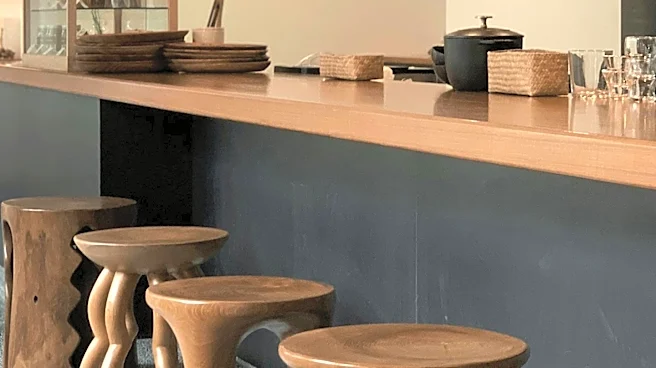
like Qahwah Time in Downtown Brooklyn, which features undulating tan slats and arched latticework, designed by a Dubai-based interior designer. Historically, Yemeni cafes in the U.S. were known for colorful decor, Arabic calligraphy, and graphics depicting the country's coffee history. However, as hundreds of new cafes open, owners are increasingly opting for a sleek, minimalist look with bright lights and an emphasis on 'Instagrammability' over overt cultural branding. This trend has been noted by customers and owners alike, with some owners, such as Hamzah Nasser of Haraz Coffee House, intentionally minimizing traditional displays to appeal to a wider, more diverse American audience. The goal is to create an atmosphere that is clean, refined, and relatable to contemporary American cafe culture, where customers often spend extended periods studying or working.
Why It's Important?
This aesthetic shift in Yemeni cafes reflects a broader cultural and economic adaptation within immigrant-owned businesses in the U.S. By adopting a 'Dubai-ification' aesthetic, these cafes are attempting to broaden their appeal beyond specific cultural groups, aiming for a more mainstream American consumer base. This strategy can lead to increased market penetration and profitability, as evidenced by the success of chains like Haraz Coffee House. The move away from overt cultural branding, while potentially diluting traditional identity, is seen by some owners as a necessary step to overcome perceived barriers and make their establishments more inviting to non-immigrant customers. The association with 'Dubai' as a brand shorthand for premium, upscale Arab and Muslim culture, further amplified by trends like 'Dubai chocolate,' indicates a strategic leveraging of popular cultural cachet. This trend highlights the complex interplay between cultural preservation, commercial viability, and assimilation in the American business landscape, where businesses adapt their presentation to resonate with evolving consumer preferences and perceptions.
What's Next?
The trend of 'Dubai-ification' in Yemeni cafes is likely to continue as more establishments open and seek to capture a broader market share. This could lead to a more standardized, minimalist aesthetic becoming the norm for Yemeni coffee shops across the U.S., potentially influencing other ethnic food and beverage businesses to adopt similar strategies of modernization and broader appeal. Owners like Hamzah Nasser may continue to rebrand products, such as renaming a pistachio cookie to a 'Dubai' cookie, to capitalize on popular trends and perceived value. The success of this approach could encourage further investment in interior design that prioritizes a 'clean' and 'safe' atmosphere, aligning with contemporary American cafe culture. However, this evolution may also spark discussions within the Yemeni-American community and among cultural observers regarding the balance between cultural authenticity and commercial adaptation, and the long-term implications for cultural identity in business.
Beyond the Headlines
The 'Dubai-ification' of Yemeni cafes touches upon deeper implications concerning cultural representation, assimilation, and the commodification of identity in a globalized market. While aiming for broader appeal can lead to economic success, it also raises questions about the potential loss of unique cultural expressions and the homogenization of diverse ethnic businesses. The shift from vibrant, culturally rich decor to a minimalist, 'international' style could be seen as a form of cultural dilution, where the distinctiveness of Yemeni heritage is downplayed in favor of a more universally palatable, yet less specific, aesthetic. This phenomenon reflects a broader trend where immigrant cultures adapt and sometimes modify their public presentation to navigate and succeed within the dominant cultural landscape. It also highlights the power of branding and perception, where 'Dubai' has become a symbol of luxury and modernity, influencing consumer expectations and business strategies even in seemingly unrelated sectors like coffee shops. This evolution underscores the ongoing negotiation of identity and belonging for immigrant communities in the U.S.